More Than Just a Job, It’s a Starting Point
A Registered Behavior Technician (RBT) certification is a nationally recognized credential that demonstrates your competence in the fundamental principles of Applied Behavior Analysis (ABA). For many, it is the entry point into a rewarding and impactful career. But a common question for those who have earned this certification is: What jobs can I get with an RBT certification? The answer is that an RBT certification is more than just a qualification for a single job; it is a launchpad for a variety of career paths within the ABA field and beyond.
This guide will explore the diverse range of jobs you can get with an RBT certification, from direct care roles to leadership positions, and will provide a roadmap for your professional growth in the dynamic and expanding world of ABA.
The Primary Role: The Registered Behavior Technician
The most direct and common job you can get with an RBT certification is, of course, the role of a Registered Behavior Technician. As an RBT, you will work under the supervision of a BCBA to provide direct, one-on-one therapy to individuals with autism and other developmental disabilities. This is the foundational role in the ABA field and provides invaluable hands-on experience.
Even within the RBT role itself, there is room for growth and specialization. You can work in a variety of settings, including:
• Clinics
• Homes
• Schools
• Community settings
As you gain experience, you may also have the opportunity to work with different populations, such as early intervention with toddlers or vocational training with adults.
Advancing on the RBT Path: Leadership and Training Roles
For experienced RBTs who demonstrate strong clinical skills and leadership potential, there are opportunities to advance to roles with greater responsibility. These jobs you can get with an RBT certification allow you to leverage your experience to support and mentor others.
1. Lead RBT
A Lead RBT is an experienced technician who takes on a leadership role within a clinical team. Responsibilities may include:
• Training and mentoring new RBTs.
• Assisting with the development of training materials.
• Providing support and guidance to other RBTs on the team.
• Serving as a liaison between the RBTs and the supervising BCBA.
2. RBT Trainer
Some larger organizations have dedicated RBT Trainer positions. These individuals are responsible for conducting the 40-hour RBT training course for new hires and for providing ongoing professional development to the RBT team.
The Next Step: Pursuing Advanced Certification
For many, an RBT certification is the first step towards a long and rewarding career in ABA. The experience and knowledge you gain as an RBT provide a solid foundation for pursuing advanced certification as a BCABA or a BCBA.
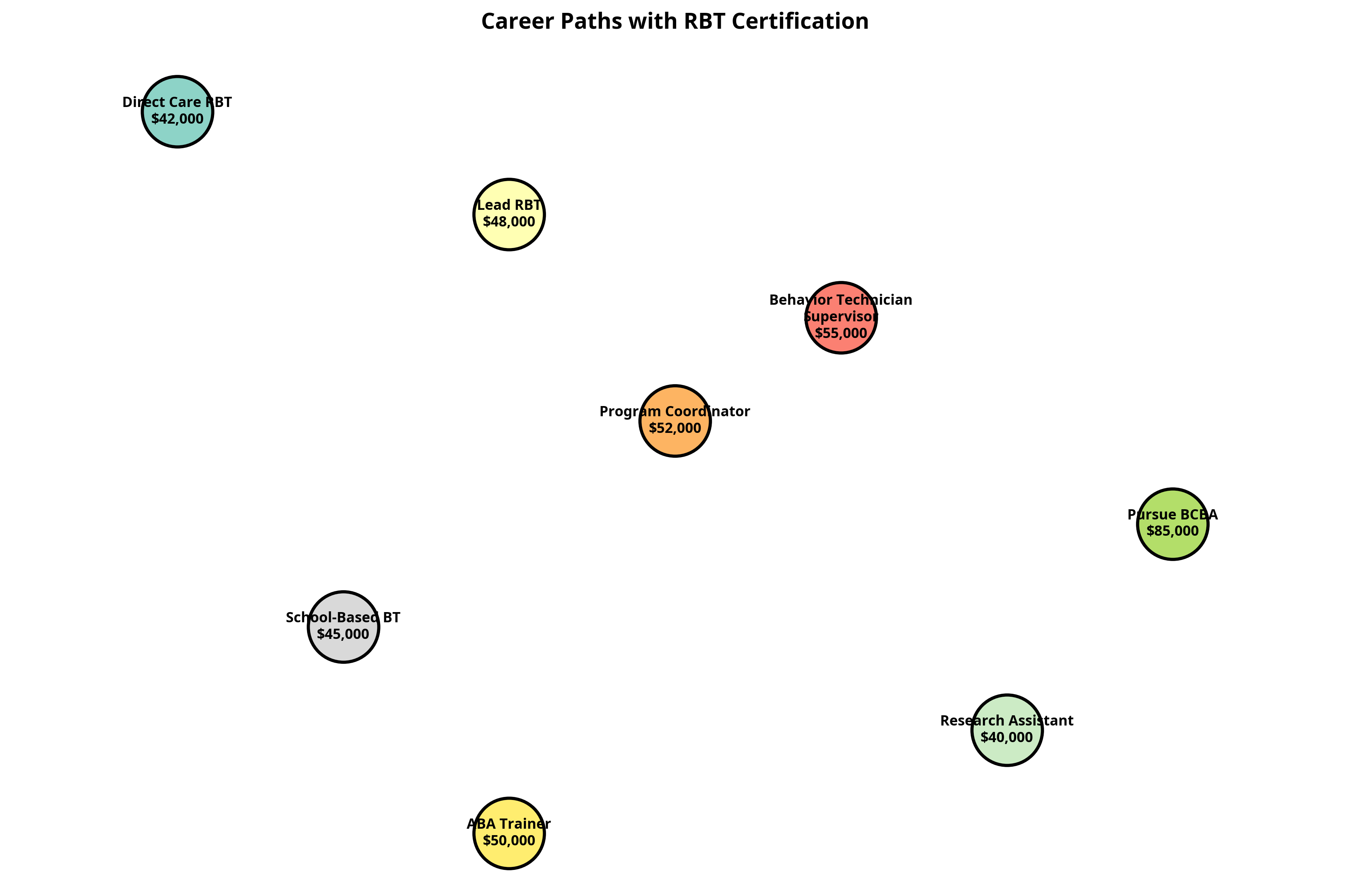
Figure 1: A visual representation of the many career paths that can stem from an RBT certification, highlighting the potential for growth and advancement within the ABA field.
Becoming a BCABA
With a bachelor’s degree and additional coursework and fieldwork, you can become a Board Certified Assistant Behavior Analyst (BCABA). A BCABA can conduct assessments and design treatment plans under the supervision of a BCBA.
Becoming a BCBA
With a master’s degree and extensive supervised fieldwork, you can become a Board Certified Behavior Analyst (BCBA). This is the highest level of certification in the ABA field and opens the door to a wide range of leadership, consulting, and entrepreneurial opportunities.
Related Fields: Leveraging Your RBT Skills
The skills you learn as an RBT are highly transferable to a variety of other fields. The knowledge of behavior analysis, data collection, and evidence-based practice can be a valuable asset in many different jobs you can get with an RBT certification.
• Special Education Teacher: Your understanding of behavior management and skill acquisition can make you an effective special education teacher.
• School Counselor or Social Worker: Your ability to understand and analyze behavior can be a valuable tool in a school counseling or social work role.
• Corporate Trainer or OBM Consultant: The principles of ABA are increasingly being used in the corporate world to improve employee performance and productivity.
• Research Assistant: Your experience with data collection and analysis can be a strong asset in a research setting.
A Certification That Opens Doors
So, what jobs can you get with an RBT certification? The answer is that the possibilities are vast and varied. An RBT certification is not an endpoint; it is a starting point. It is a credential that can open the door to a direct care role, a leadership position, a path to advanced certification, or even a career in a related field. The skills and experience you gain as an RBT are in high demand, and with a commitment to lifelong learning and professional development, your RBT certification can be the key that unlocks a world of opportunity.