The Heart of ABA Service Delivery
For those exploring a career in Applied Behavior Analysis (ABA), the role of the Registered Behavior Technician (RBT) is often the first and most important step. But what is an RBT job, exactly? An RBT is a paraprofessional who works under the close, ongoing supervision of a Board Certified Behavior Analyst (BCBA) or a Board Certified Assistant Behavior Analyst (BCABA). RBTs are the front-line providers of ABA services, working directly with clients to implement treatment plans and help them achieve their goals. They are, in essence, the heart of ABA service delivery, playing a critical role in improving the quality of and access to care for individuals with autism and other developmental disabilities.
This guide will provide a comprehensive answer to the question, "what is an RBT job?" by exploring the key responsibilities of the role, the common work settings, and the rewarding career path that an RBT certification can unlock.
The Core Responsibilities of an RBT
The primary role of an RBT is to implement the treatment plan designed by their supervising BCBA. This involves a variety of tasks and responsibilities, all aimed at helping clients learn new skills and reduce challenging behaviors.
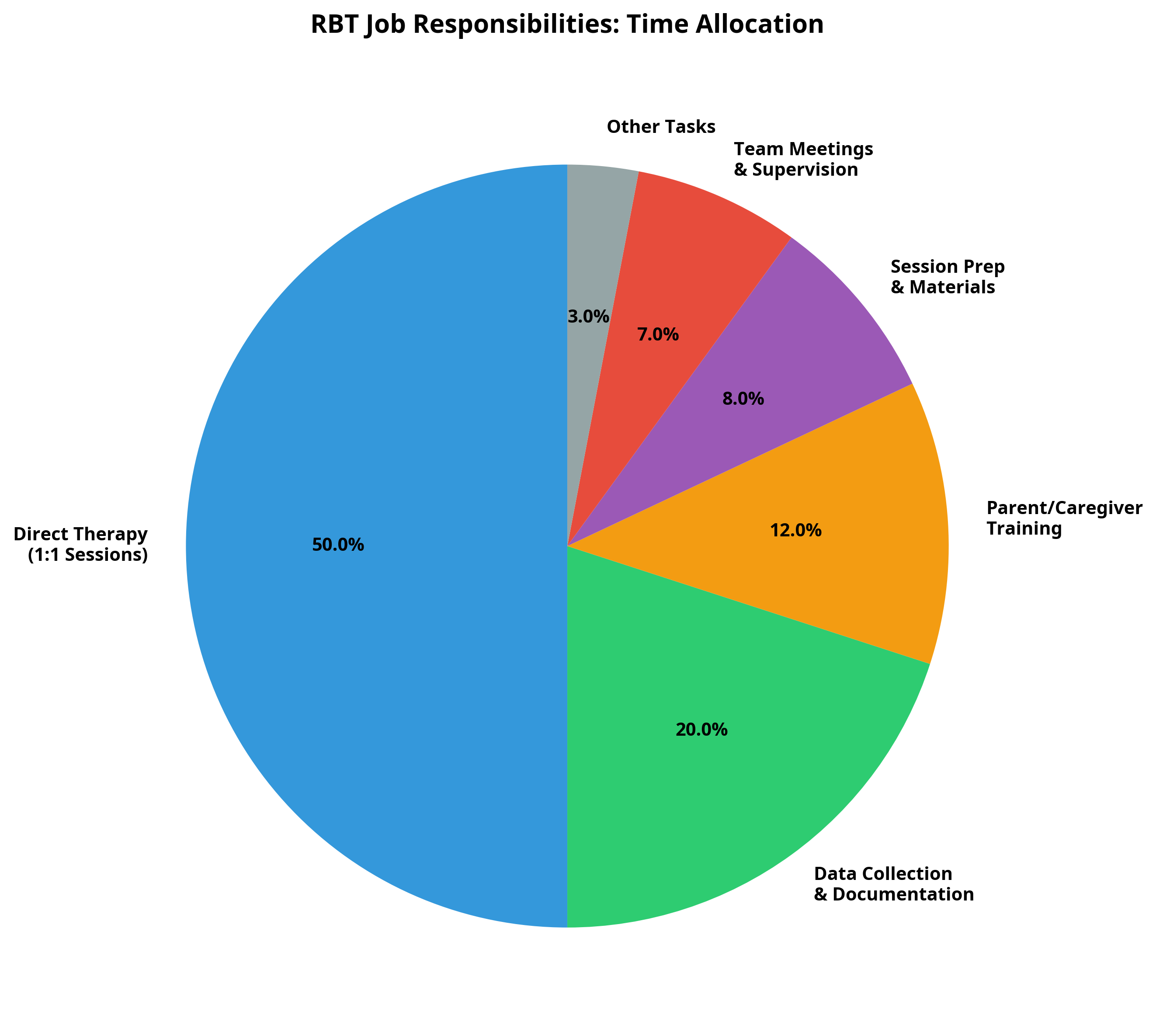
Figure 1: A breakdown of how an RBT typically allocates their time across various job responsibilities. The majority of their time is spent in direct, one-on-one therapy with clients.
Here is a closer look at the key duties of an RBT:
1. Direct Client Care
This is the core of the RBT role. RBTs spend the majority of their time working one-on-one with clients, implementing the specific interventions and teaching procedures outlined in the treatment plan. This may involve:
• Discrete Trial Training (DTT): A structured teaching method used to teach new skills.
• Natural Environment Teaching (NET): A more naturalistic teaching method that uses the client’s interests and motivations to create learning opportunities.
• Behavior Reduction Strategies: Implementing strategies to reduce challenging behaviors, such as aggression or self-injury.
2. Data Collection and Documentation
ABA is a data-driven field, and RBTs are responsible for accurately collecting data on their clients’ progress. This may involve tracking the frequency of a behavior, the duration of a tantrum, or the percentage of correct responses in a teaching session. This data is then used by the supervising BCBA to make informed decisions about the treatment plan.
3. Communication and Collaboration
RBTs are a vital link between the client, the family, and the supervising BCBA. They are responsible for communicating with parents and caregivers about the client’s progress, providing training on how to implement strategies at home, and collaborating with the BCBA to ensure that the treatment plan is being implemented effectively.
4. Session Preparation
Before each session, an RBT must prepare the necessary materials, such as visual aids, reinforcers, and data sheets. This ensures that the session runs smoothly and that all learning opportunities are maximized.
Where Do RBTs Work?
So, what is an RBT job like in terms of the work environment? RBTs can work in a variety of settings, which provides a great deal of flexibility and choice in their careers.
• In-Home Therapy: Many RBTs provide services in the client’s home, which allows them to work on skills in the natural environment.
• Clinic-Based Therapy: ABA clinics provide a structured environment for therapy, with access to a wide range of resources and a team of other professionals.
• School-Based Services: RBTs are increasingly being hired to work in schools, providing support to students with behavioral challenges in the classroom.
• Community-Based Services: RBTs may also work with clients in the community, helping them to generalize skills in real-world settings like the grocery store or the park.
The RBT Career Path
An RBT certification is not just a job; it is the first step on a rewarding career path in the ABA field. Many RBTs go on to pursue further education and certification, advancing to roles with greater responsibility and higher earning potential.
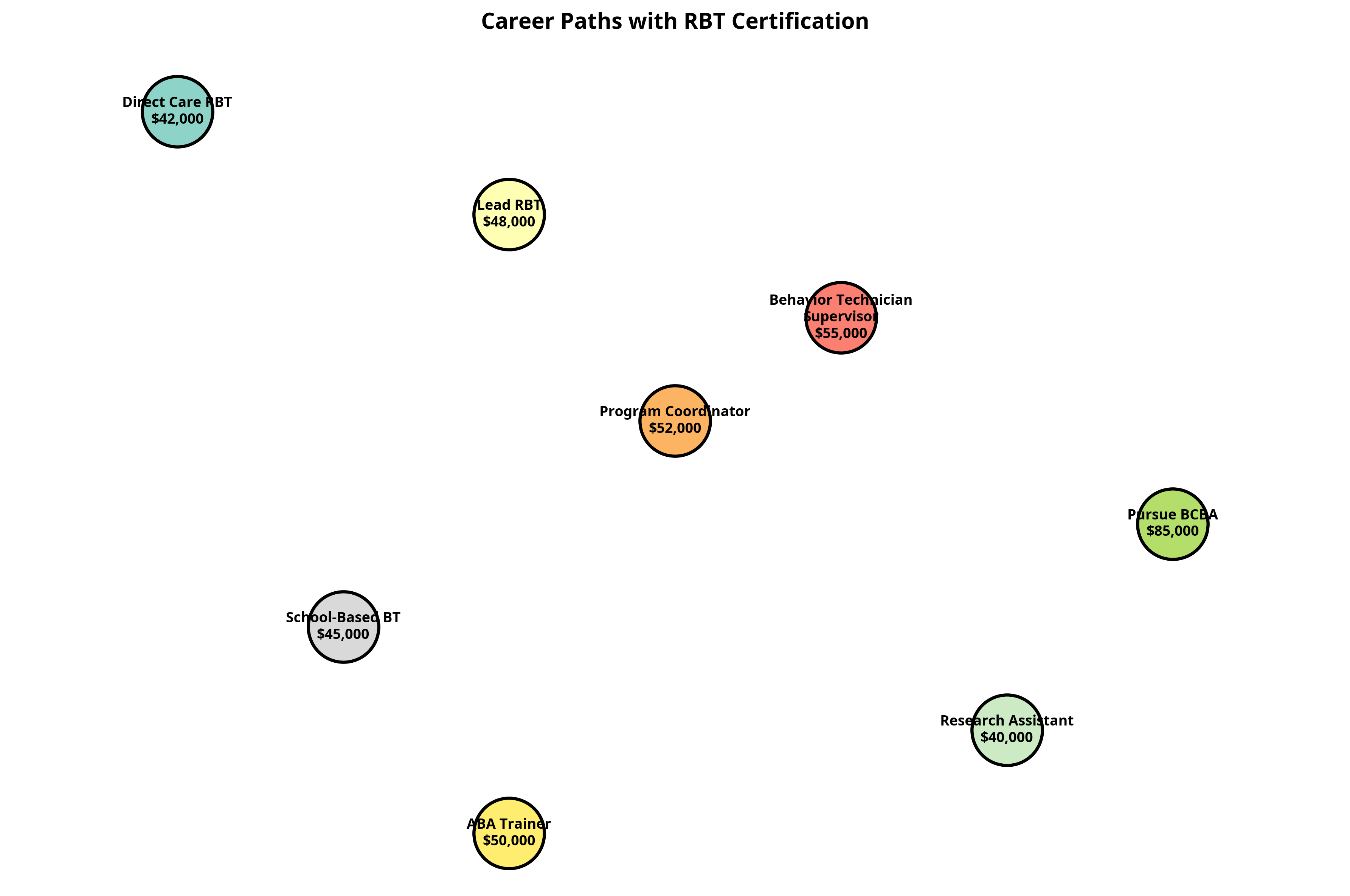
Figure 2: A visual representation of the various career paths available to an RBT, from advancing to a Lead RBT to pursuing a BCBA certification.
Here are some of the common career paths for an RBT:
• Lead RBT: An experienced RBT may be promoted to a Lead RBT position, where they are responsible for training and mentoring new RBTs.
• BCABA: With a bachelor’s degree and additional coursework and fieldwork, an RBT can become a Board Certified Assistant Behavior Analyst (BCABA).
• BCBA: The ultimate goal for many RBTs is to become a Board Certified Behavior Analyst (BCBA), which requires a master’s degree and extensive fieldwork.
Conclusion: A Rewarding and Impactful Career
In summary, what is an RBT job? It is a dynamic, challenging, and incredibly rewarding career that places you at the heart of ABA service delivery. It is a role that requires patience, compassion, and a commitment to evidence-based practice. But most importantly, it is a job that allows you to make a real and lasting difference in the lives of others. If you are looking for a career with purpose and a clear path for growth, becoming a Registered Behavior Technician may be the perfect choice for you.