The field of Applied Behavior Analysis has experienced explosive growth over the past decade, transforming from a niche specialty into one of the most in-demand healthcare professions. With autism diagnoses affecting one in thirty-six children and the proven effectiveness of ABA interventions in improving quality of care, the demand for qualified behavior analysts has never been higher. For professionals considering a career in ABA or those already in the field planning their next move, understanding the true earning potential at each career stage is essential for making informed decisions about education, certification, and career advancement.
This comprehensive analysis examines real compensation data across all major ABA career levels, from entry-level Registered Behavior Technicians to senior Clinical Directors and private practice owners. The findings reveal not only substantial earning potential but also strategic pathways that maximize return on investment while improving access to care for the communities that need it most.
Understanding the Complete Compensation Landscape
Before diving into individual career stages, it's important to understand how investment and salary compare across the entire ABA career spectrum. The chart below illustrates the relationship between the average investment required for each certification level and the corresponding average annual salary.
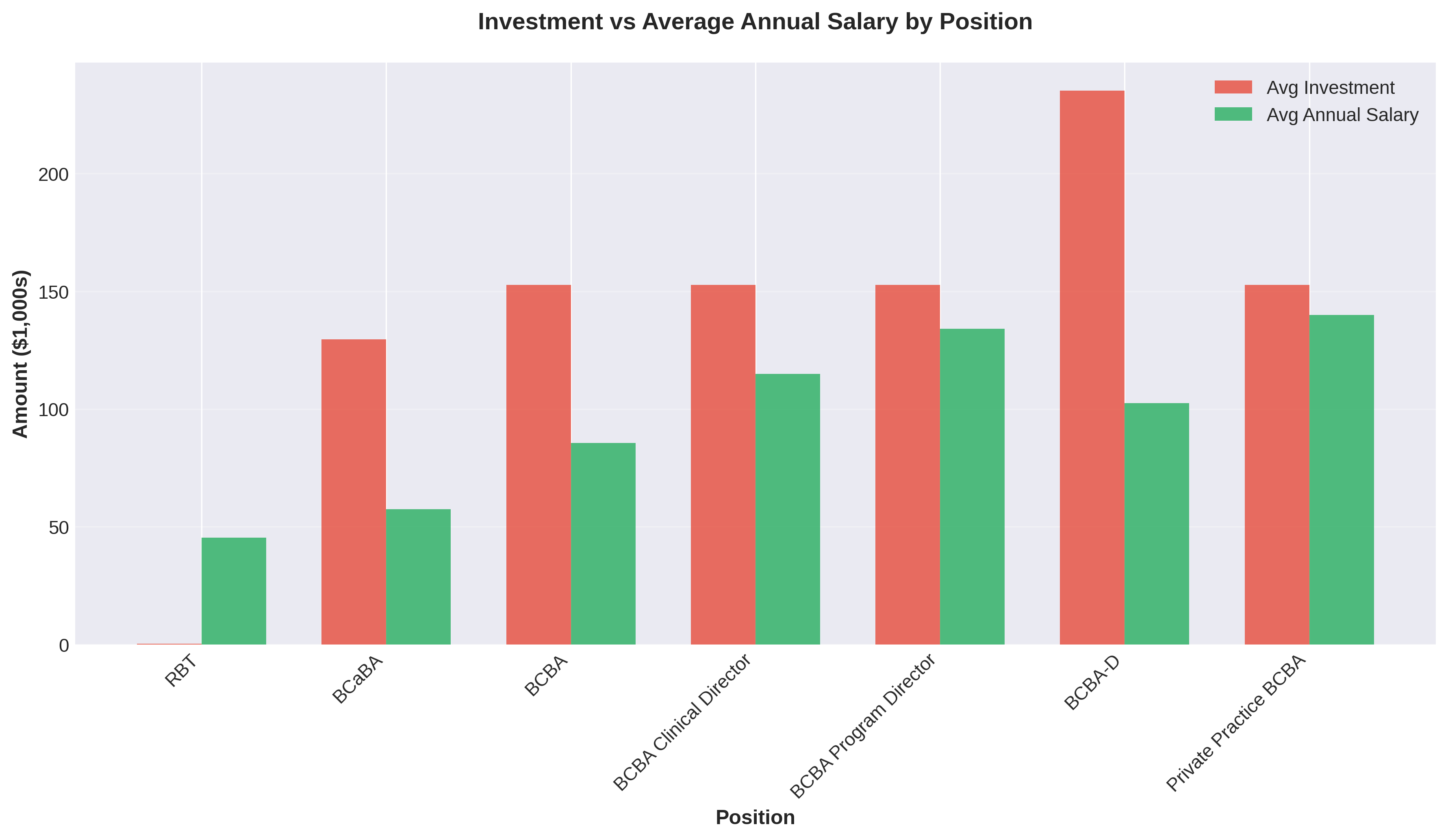
As the data shows, while advanced positions require substantially higher educational investments, the salary increases more than compensate for these costs. The key insight here is that the gap between investment and salary widens favorably as you progress through the career ladder, with leadership and private practice roles offering the most significant returns.
The Entry Point: Registered Behavior Technician (RBT)
For those new to the field, the Registered Behavior Technician certification offers the fastest and most accessible entry into ABA therapy. With a total investment of just $454 on average and a timeline of one to three months from start to certification, the RBT path provides an almost immediate return on investment. RBTs earn an average annual salary of $45,382, with a range spanning from $36,763 to $54,000 depending on geographic location and employer.
What makes the RBT position particularly attractive is not just the low barrier to entry, but the opportunity it provides to gain hands-on clinical experience while pursuing higher education. Many successful BCBAs began their careers as RBTs, working directly with clients to implement behavior intervention plans under supervision while completing their bachelor's and master's degrees. This approach allows professionals to earn income throughout their educational journey, reducing the financial burden of advanced degrees while building the practical skills that will serve them throughout their careers.
The RBT role requires only a high school diploma, completion of a forty-hour training program, and passing a competency assessment administered by a supervising BCBA. While the salary ceiling is lower compared to advanced positions, the investment recovery time is measured in weeks rather than years, making it an ideal starting point for career exploration and professional development.
The Mid-Level Path: Board Certified Assistant Behavior Analyst (BCaBA)
The BCaBA certification represents a significant step up in both responsibility and compensation. With a bachelor's degree requirement and an average total investment of $129,650, BCaBAs earn an average salary of $57,500 annually, with a range from $50,000 to $65,000. This certification allows professionals to supervise RBTs and assist in designing behavior-analytic interventions, though they must work under the supervision of a qualified BCBA.
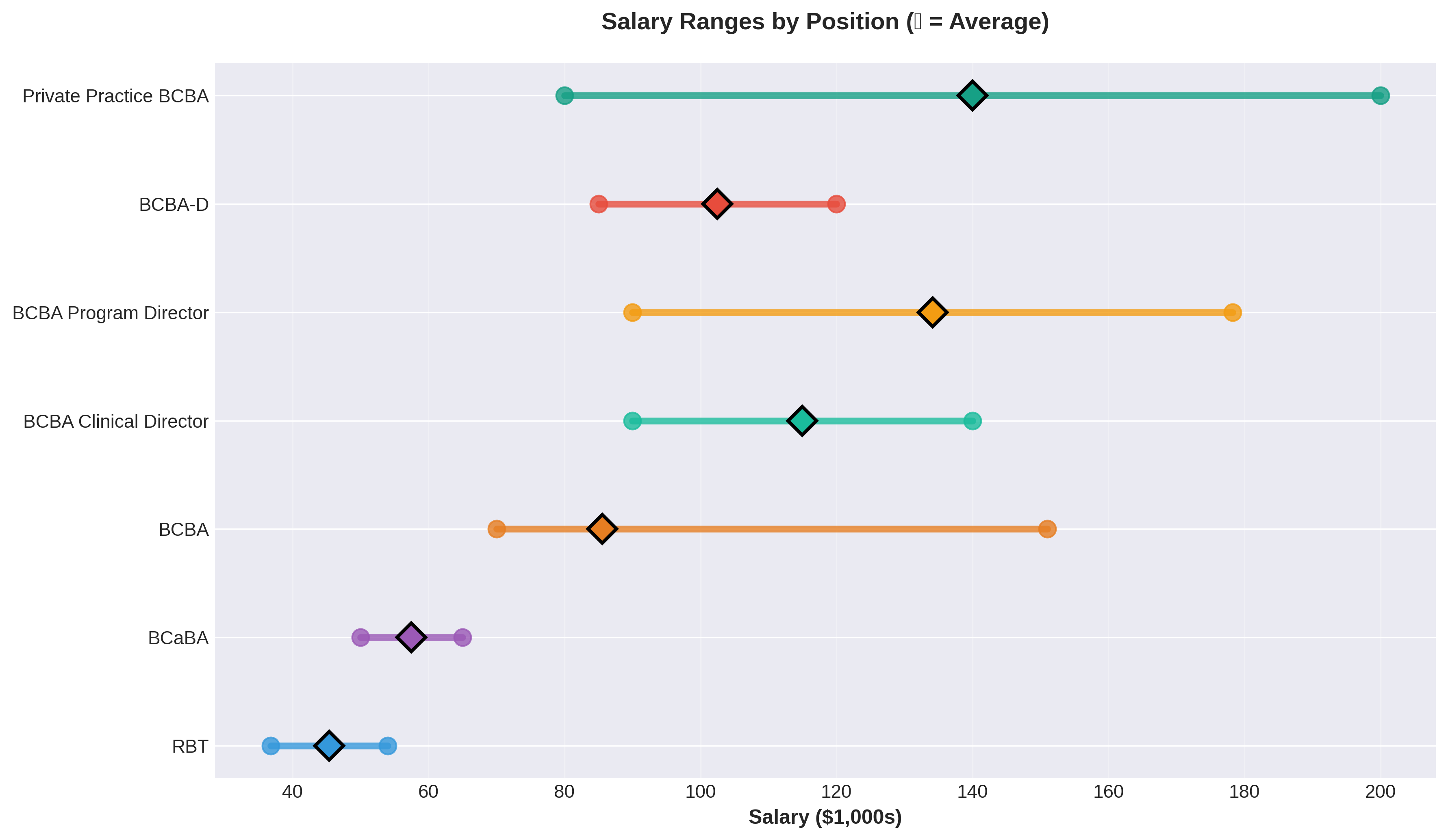
The salary range visualization above demonstrates the earning potential across all ABA positions, with the diamond markers indicating average salaries. Notice how the BCaBA position offers a moderate increase from RBT compensation, while the BCBA and leadership roles show substantially wider ranges and higher averages, reflecting the impact of experience, specialization, and geographic location on earnings.
The BCaBA path requires completion of specific ABA coursework and between 1,000 to 1,300 hours of supervised fieldwork experience. While the return on investment timeline extends to approximately 2.3 years, the role provides valuable supervisory experience and positions professionals for advancement to the BCBA level. Over a thirty-year career, BCaBAs can expect a net lifetime value of approximately $1.60 million, making it a solid mid-career option for those with a bachelor's degree who may not immediately pursue graduate education.
The Professional Standard: Board Certified Behavior Analyst (BCBA)
The BCBA certification is widely recognized as the gold standard in the field and opens the door to independent practice, clinical leadership, and significantly higher earning potential. With a master's degree requirement and an average total investment of $152,770, BCBAs earn an average salary of $85,571, with a remarkable range from $70,000 to $151,000 depending on experience, location, and work setting.
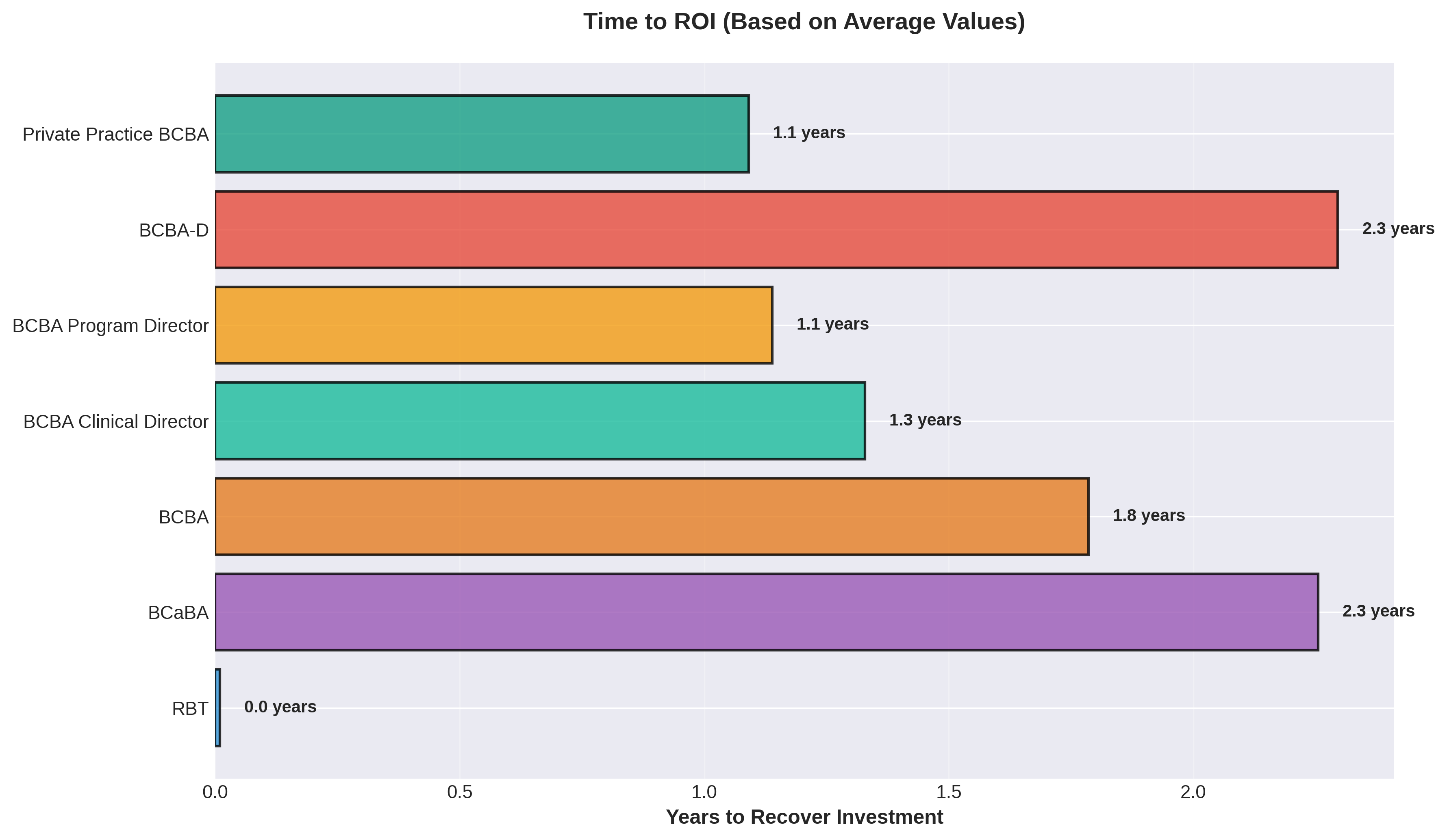
One of the most compelling aspects of the BCBA investment is the rapid recovery time. As illustrated in the chart above, BCBAs recover their educational investment in just 1.8 years on average. This is particularly impressive when compared to the BCaBA path, which takes 2.3 years despite a lower total investment, demonstrating how the higher BCBA salary accelerates the return on investment.
The investment in BCBA certification pays dividends quickly, with an average recovery time of just 1.8 years. Over a thirty-year career, BCBAs can expect a net lifetime value of $2.41 million, more than justifying the educational investment. The path to BCBA certification requires a master's degree in behavior analysis or a related field, completion of verified coursework, and between 1,500 to 2,000 hours of supervised fieldwork experience.
Geographic location plays a substantial role in BCBA compensation. The highest-paying states include New Jersey at $95,532, Wisconsin at $94,521, and Nevada at $91,642. Metro areas in California and Massachusetts command even higher salaries, with Santa Cruz, California leading at $108,424 and Sunnyvale, California following at $105,572. These regional variations reflect both cost of living differences and local market demand for qualified behavior analysts.
Regional Shortages and Premium Compensation
Certain regions are experiencing acute shortages of qualified BCBAs, leading to aggressive recruitment strategies and premium compensation packages. Companies are increasingly offering substantial sign-on bonuses to attract talent to underserved markets. For example, Bierman Autism Centers in Tempe, Arizona is currently offering Clinical Director positions with BCBA requirements that include up to $10,000 sign-on bonuses, reflecting the competitive landscape for experienced professionals.
These regional shortages represent significant opportunities for BCBAs willing to relocate or work in high-demand areas. Beyond sign-on bonuses, many organizations are offering enhanced benefits packages, flexible scheduling, and accelerated career advancement opportunities to secure qualified talent. The shortage is particularly pronounced in rapidly growing metropolitan areas and regions with limited access to ABA services, creating a compelling case for professionals seeking both financial rewards and the opportunity to make a meaningful impact on underserved communities.
Leadership Positions: Clinical and Program Directors
For experienced BCBAs, advancement into leadership roles offers substantial increases in both compensation and professional responsibility. Clinical Directors earn an average of $115,000 annually, with a range from $90,000 to $140,000, while Program Directors command even higher salaries averaging $134,146 with a maximum potential of $178,292.
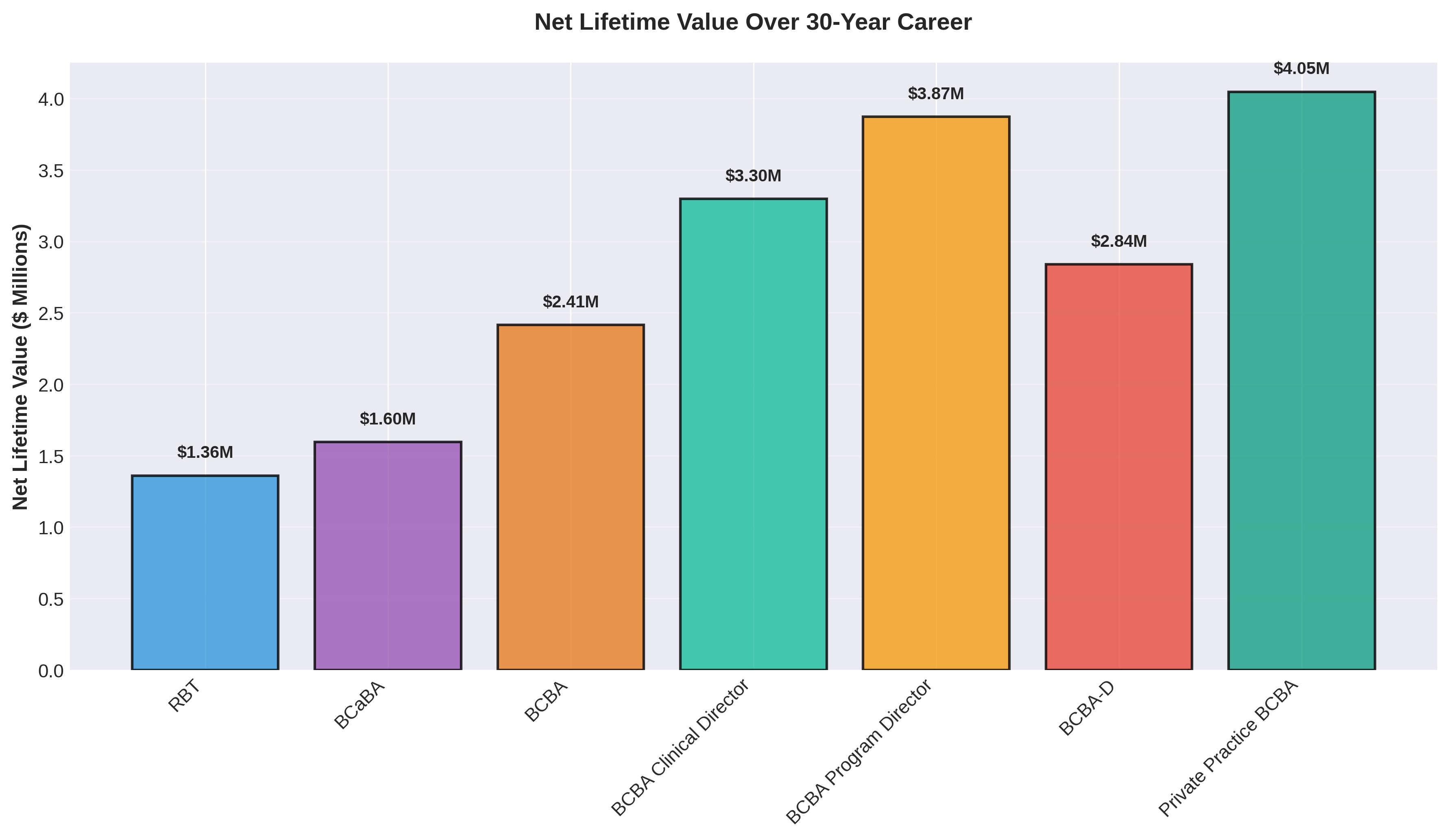
The long-term financial impact of career choices becomes crystal clear when examining lifetime earning potential. As shown above, leadership positions and private practice dramatically outperform entry and mid-level roles over a thirty-year career. Program Directors can expect to accumulate nearly $3.87 million in net lifetime value, while private practice BCBAs lead the field at $4.05 million.
These leadership positions require not only BCBA certification but also several years of proven clinical experience and demonstrated leadership capabilities. The return on investment for these roles is exceptional, with recovery times of just 1.1 to 1.3 years despite the same educational investment as standard BCBA positions. The difference lies in the experience and expertise developed over years of clinical practice, which translates directly into higher earning potential.
Clinical Directors typically oversee clinical operations, manage teams of therapists, ensure quality of care across programs, and maintain compliance with regulatory standards. Program Directors take on additional responsibilities including program development, strategic planning, and organizational growth initiatives. Both roles offer the stability of organizational employment while providing compensation that rivals or exceeds private practice in many markets.
The Entrepreneurial Path: Private Practice
For BCBAs with an entrepreneurial spirit, private practice represents the highest earning potential in the field. Private practice BCBAs earn an average of $140,000 annually, with established practitioners earning upwards of $200,000 or more. The net lifetime value over a thirty-year career reaches an impressive $4.05 million, the highest of any career path in ABA.
The private practice route offers not only financial rewards but also professional autonomy, the ability to specialize in specific populations or treatment approaches, and the flexibility to build a practice that aligns with personal values and professional goals. However, it also carries the responsibilities of business ownership, including marketing, billing, staff management, and the financial risks inherent in entrepreneurship.
Most successful private practice owners recommend gaining three to five years of clinical experience in organizational settings before launching an independent practice. This allows professionals to build clinical expertise, develop professional networks, understand insurance billing and compliance requirements, and accumulate the capital necessary for startup costs.
The Academic Route: BCBA-D
The doctoral-level BCBA-D designation represents the highest educational achievement in the field, though it does not necessarily translate to the highest compensation. BCBA-Ds earn an average of $102,500 annually, with a range from $85,000 to $120,000. The total investment averages $235,270 with a recovery time of 2.3 years.
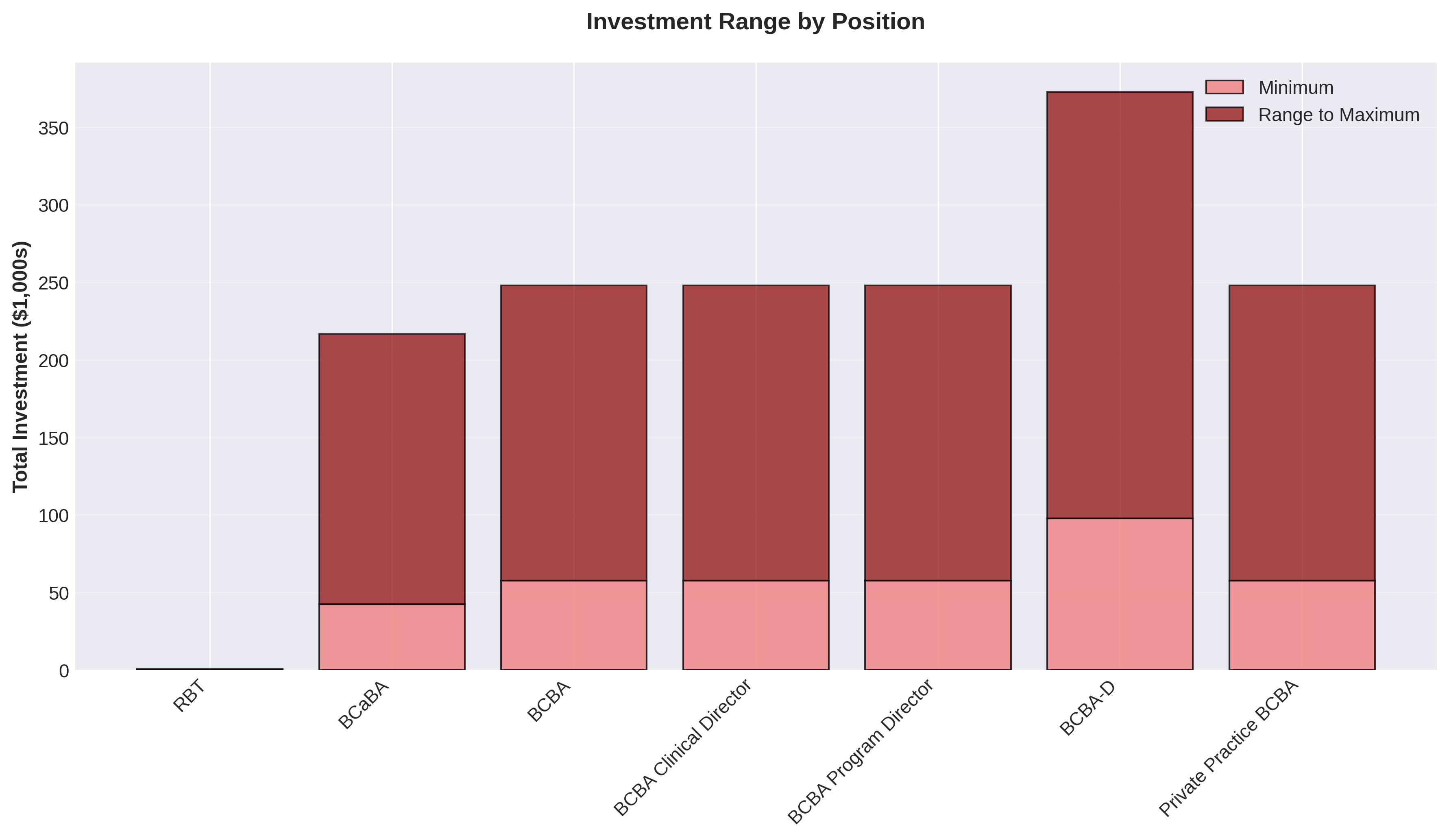
The investment range chart above illustrates the substantial variation in total costs depending on program selection, scholarship availability, and whether supervision is employer-provided or privately purchased. The BCBA-D path shows the widest investment range, reflecting the diversity of doctoral program costs and the longer education timeline.
The BCBA-D path is best suited for professionals interested in academic careers, research positions, or senior leadership roles that require doctoral credentials. While the financial return on investment is lower compared to private practice or program director roles, the BCBA-D offers opportunities to contribute to the advancement of the field through research, teach the next generation of behavior analysts, and influence policy and practice standards at the highest levels.
Strategic Career Planning for Maximum ROI
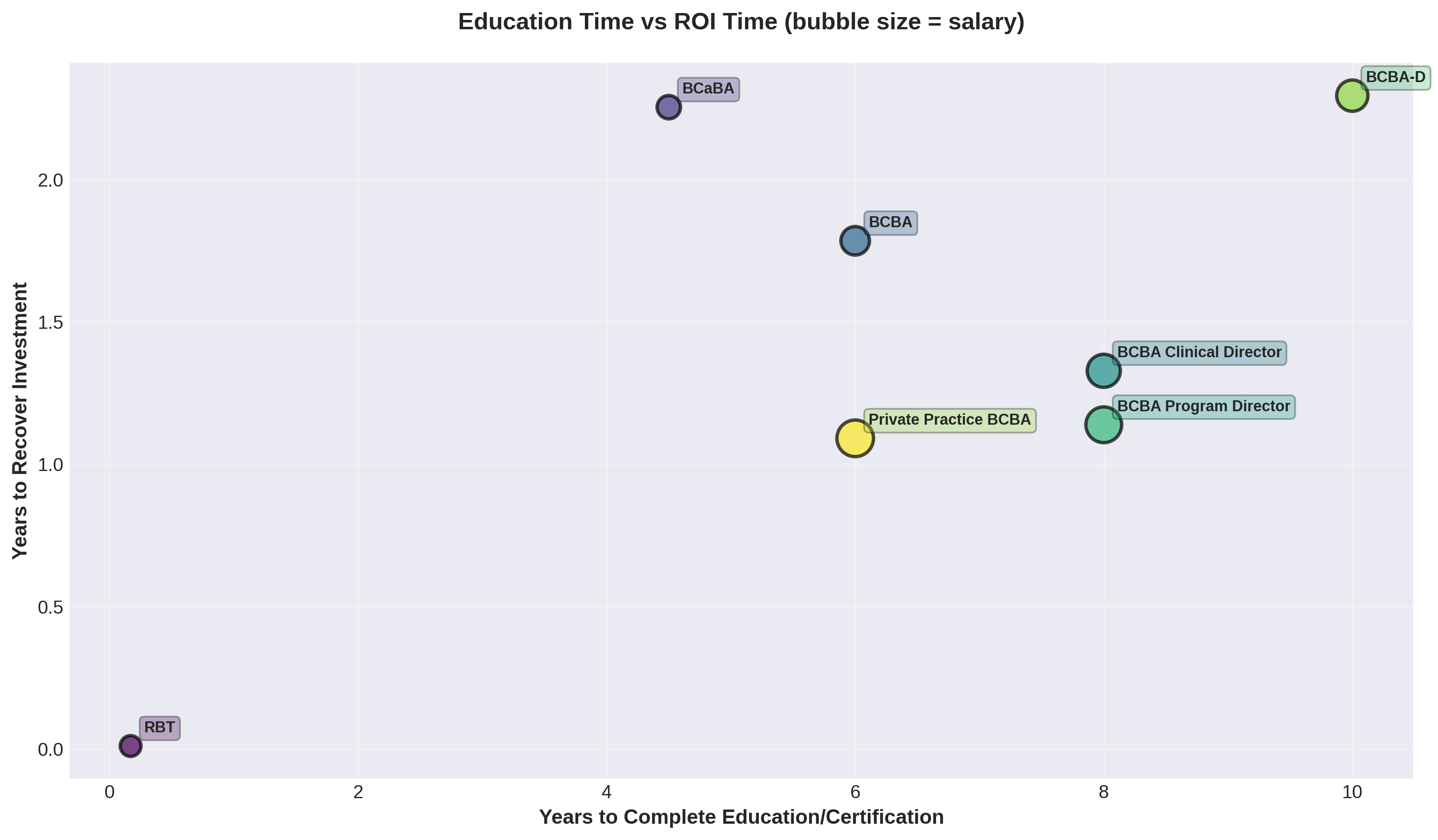
The relationship between education time and ROI recovery time reveals important strategic insights. As shown in the scatter plot above, the RBT path offers almost immediate returns with minimal education time. Interestingly, while the BCBA-D requires the longest education period, its ROI recovery time is actually longer than leadership positions that require the same BCBA foundation but less total education. This demonstrates that experience and role selection can be more financially impactful than additional degrees.
The data reveals a clear strategic pathway for professionals seeking to maximize their return on investment while building a rewarding career in ABA. The optimal approach begins with RBT certification to gain immediate entry and clinical experience, progresses through BCBA certification while working and earning income, and culminates in either private practice for maximum earning potential or program director roles for those preferring organizational leadership.
This phased approach allows professionals to minimize educational debt by earning income throughout their training, build progressively more sophisticated clinical skills, develop professional networks that will support career advancement, and make informed decisions about specialization and career direction based on actual experience in the field.
The investment in ABA education and certification consistently demonstrates strong returns across all career levels. With the field projected to grow nineteen percent through 2033 and demand for services continuing to outpace supply, the career prospects for qualified behavior analysts remain exceptionally strong. For professionals committed to improving quality of care and expanding access to evidence-based interventions, the ABA field offers both financial rewards and the profound satisfaction of making a lasting difference in the lives of individuals and families.