
Introduction to Level 3 Autism
Autism Spectrum Disorder (ASD) is a complex developmental condition that affects communication, behavior, and social interaction in a wide variety of ways. To better classify the diverse range of support needs among individuals with autism, the Diagnostic and Statistical Manual of Mental Disorders, Fifth Edition (DSM-5), introduced a three-level system. Level 3 autism, designated as "Requiring Very Substantial Support," represents the most severe form of ASD, where individuals face significant challenges in their daily functioning. This article provides a comprehensive overview of Level 3 autism, exploring its diagnostic criteria, characteristics, and the types of support required to improve the quality of life for individuals at this level of the spectrum. Our aim is to foster a deeper understanding for families, educators, and ABA clinicians, thereby improving access to high-quality, effective care.
What is Level 3 Autism?
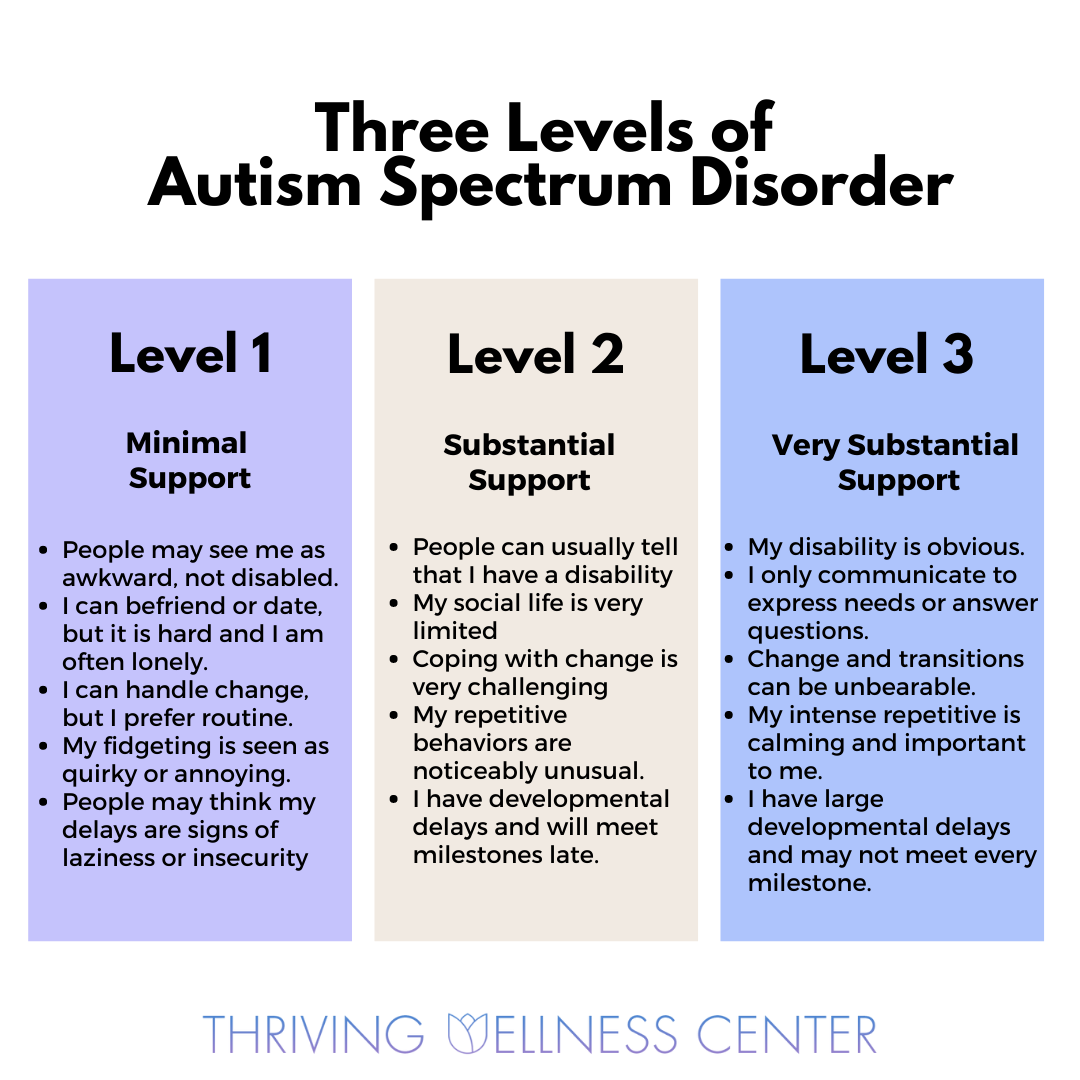
Level 3 autism is not a separate diagnosis but rather a specifier used to indicate the degree of support an individual with ASD requires. According to the DSM-5, individuals at Level 3 have "severe deficits in verbal and nonverbal social communication skills" that "cause severe impairments in functioning," and they exhibit "extreme difficulty coping with change" and other restricted or repetitive behaviors that "markedly interfere with functioning in all spheres"
This level is assigned to individuals who need very substantial, and often constant, support to manage daily life.
It is crucial to understand that while the challenges are significant, a Level 3 diagnosis does not define a person's potential. With appropriate and intensive intervention, such as Applied Behavior Analysis (ABA) therapy, individuals with Level 3 autism can make meaningful progress in their development and lead fulfilling lives.
Core Characteristics of Level 3 Autism
Individuals with Level 3 autism display a range of characteristics that significantly impact their ability to communicate, interact socially, and manage their behavior. While every individual is unique, some common characteristics include:
Social Communication Challenges
- Limited or No Spoken Language: Many individuals with Level 3 autism are nonverbal or have very limited use of spoken language. They may use a few words but are often unable to communicate in full sentences.
- Minimal Social Initiation: They rarely initiate social interactions and may not respond to social overtures from others.
- Severe Impairment in Nonverbal Communication: Individuals at this level often have difficulty understanding and using nonverbal cues such as eye contact, facial expressions, and gestures.
Restricted and Repetitive Behaviors
- Extreme Inflexibility: A hallmark of Level 3 autism is an extreme resistance to change. Minor changes in routine or environment can cause significant distress.
- Intense Fixated Interests: They may have very narrow and intense interests that they are preoccupied with, making it difficult to redirect their attention.
- Repetitive Motor Movements: Stereotyped or repetitive motor movements, such as rocking, spinning, or hand-flapping, are common and can interfere with their ability to engage in other activities.
Support Needs for Individuals with Level 3 Autism
The designation "Requiring Very Substantial Support" underscores the intensive level of assistance individuals with Level 3 autism need across all areas of their lives. The following chart illustrates the varying levels of support needed across different domains for each level of autism.
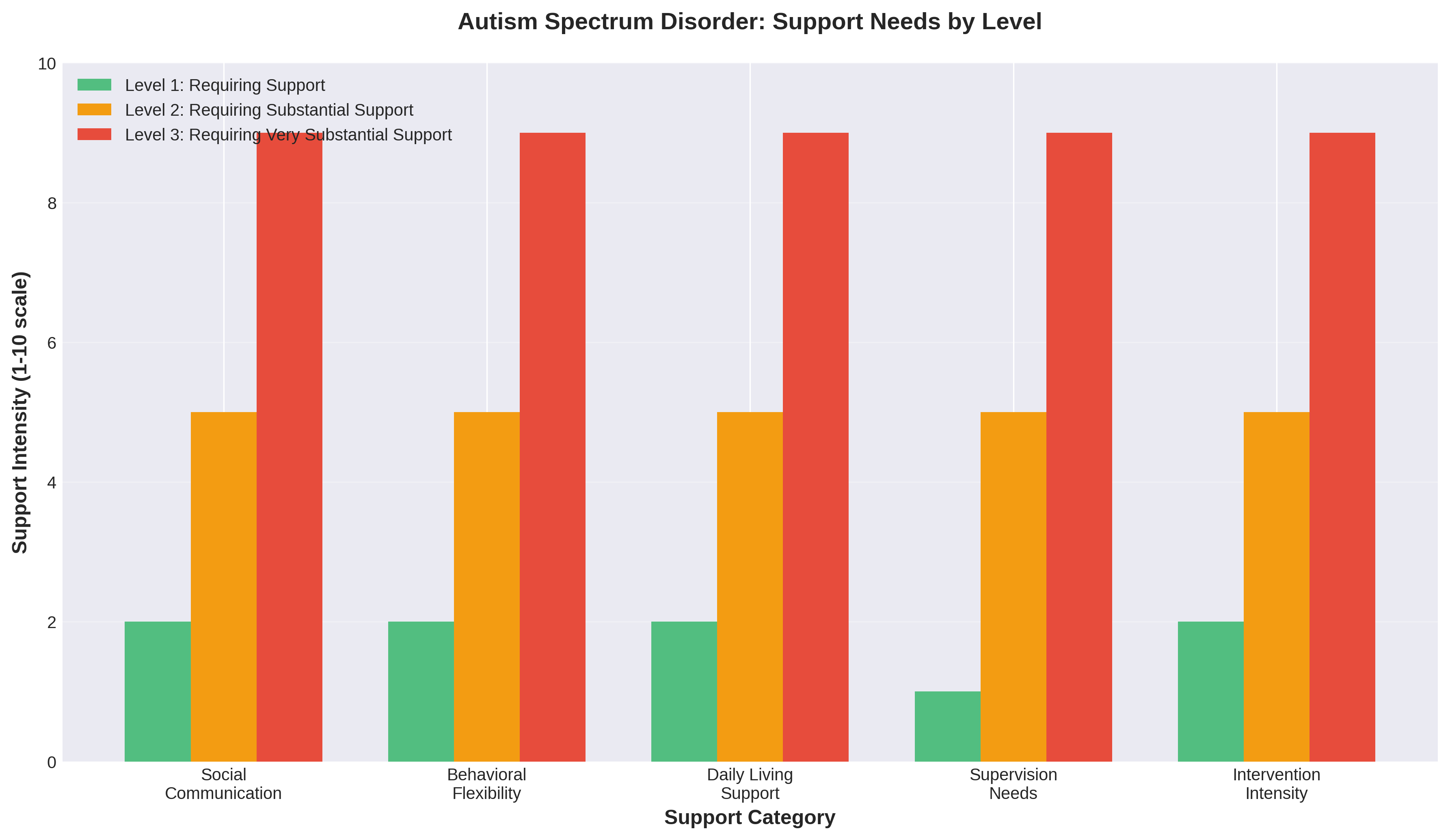
As the chart shows, individuals with Level 3 autism require the highest level of support in all categories. This support is typically needed in the following areas:
- Daily Living Skills: Assistance with basic self-care activities such as dressing, eating, and hygiene is often necessary.
- Communication: Augmentative and Alternative Communication (AAC) systems, such as picture exchange systems (PECS) or speech-generating devices, are frequently used to help individuals communicate their needs and wants.
- Behavioral Support: Intensive behavioral interventions, such as those provided in ABA therapy, are essential to address challenging behaviors and teach new, more adaptive skills.
- Supervision: Due to safety concerns and the need for constant support, individuals with Level 3 autism often require 24/7 supervision.
The Role of ABA Therapy in Supporting Level 3 Autism
Applied Behavior Analysis (ABA) therapy is the most widely researched and effective intervention for individuals with autism, including those at Level 3. ABA therapy is not a one-size-fits-all approach; it is highly individualized to meet the unique needs of each person. For individuals with Level 3 autism, ABA programs are typically intensive and focus on building foundational skills.
Key Components of an ABA Program for Level 3 Autism:
- Functional Communication Training (FCT): Teaching the individual to use a functional communication system to express their needs and wants, which can help to reduce challenging behaviors that stem from an inability to communicate.
- Discrete Trial Training (DTT): A structured teaching method that breaks down skills into small, manageable steps and provides repeated opportunities for learning.
- Natural Environment Teaching (NET): Teaching skills in the natural environment where they will be used, which helps with generalization.
- Behavior Intervention Plans (BIP): Developing and implementing plans to address severe challenging behaviors, based on an understanding of the function of the behavior.
- Parent and Caregiver Training: Providing parents and caregivers with the skills and strategies to support their child's development and manage challenging behaviors in the home and community.
Conclusion: A Path Forward with Support and Understanding
Understanding Level 3 autism is the first step toward providing the necessary support for individuals to thrive. While the challenges associated with "Requiring Very Substantial Support" are significant, they are not insurmountable. Through intensive, evidence-based interventions like ABA therapy, and with the unwavering support of families, educators, and a dedicated clinical team, individuals with Level 3 autism can learn, grow, and achieve a higher quality of life. It is through a commitment to providing access to this high-quality care that we can empower every individual on the autism spectrum to reach their full potential.