The New Frontier of ABA Service Delivery
The field of Applied Behavior Analysis (ABA) has traditionally been a hands-on profession, with services delivered in person, in homes, clinics, and schools. However, the rise of telehealth technology has opened up a new and exciting frontier: remote behavior technician jobs. The ability to provide high-quality ABA services from a distance has created a wealth of new opportunities for behavior technicians, offering greater flexibility, a better work-life balance, and the chance to serve clients in a wider geographic area. This guide will explore the growing world of remote behavior technician jobs, providing a comprehensive overview of the role, the benefits and challenges, and how you can find your place in the evolving landscape of telehealth ABA.
The Rise of Telehealth ABA
Telehealth, the delivery of healthcare services via technology, has been gaining traction for years, but the COVID-19 pandemic accelerated its adoption across all areas of medicine, including ABA. Providers and families quickly discovered that many aspects of ABA therapy could be delivered effectively through video conferencing and other digital tools. This has led to a significant increase in the availability of remote behavior technician jobs.
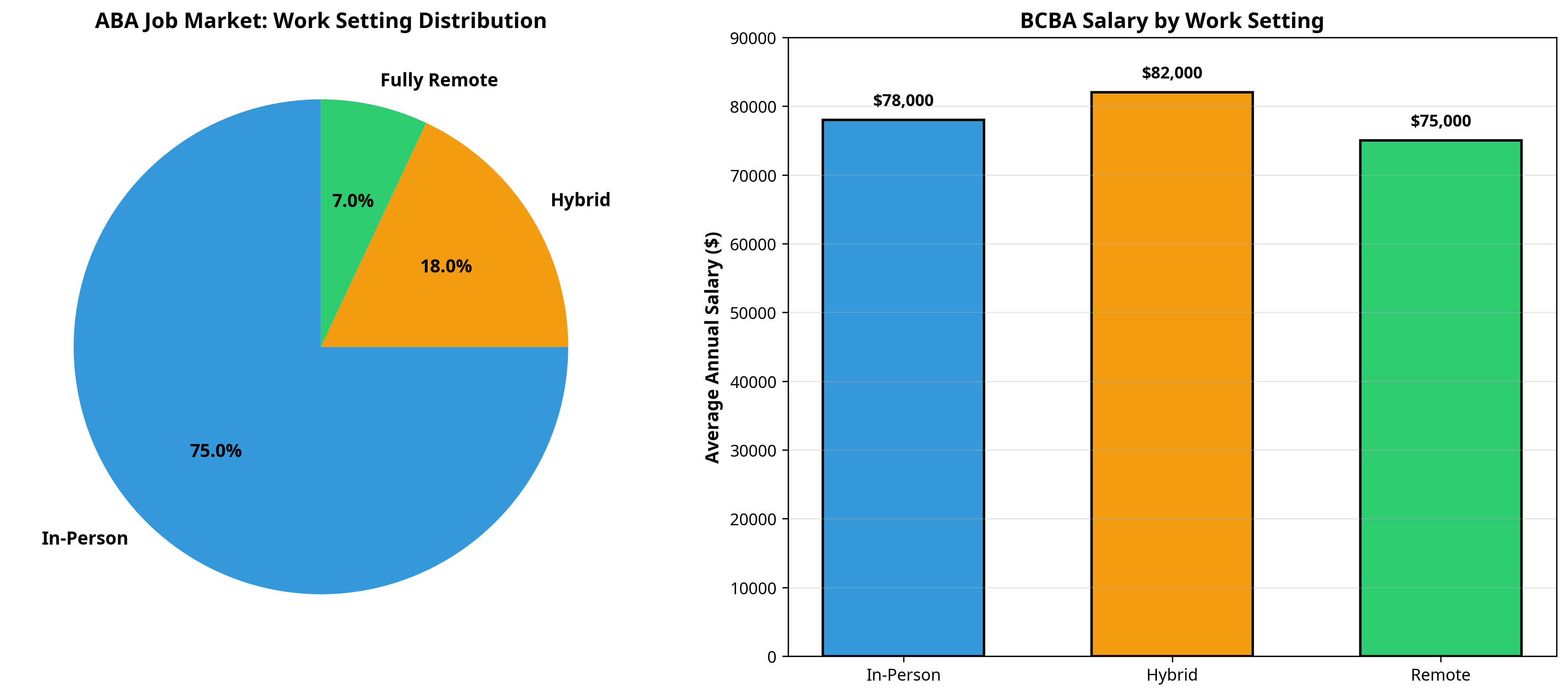
Figure 1: A breakdown of the ABA job market by work setting. While in-person jobs still dominate, the percentage of hybrid and fully remote positions is steadily growing.
What Does a Remote Behavior Technician Do?
The core responsibilities of a remote behavior technician are similar to those of an in-person technician: to implement treatment plans, collect data, and collaborate with the supervising BCBA. However, the way these services are delivered is different.
A typical remote behavior technician job involves:
• Parent/Caregiver Coaching: A significant portion of telehealth ABA involves coaching parents and caregivers to implement interventions themselves. The remote BT provides real-time feedback and guidance via video conference.
• Direct Telehealth Sessions: In some cases, the remote BT may work directly with the client via video, particularly with older children and adolescents who can engage with a screen-based format.
• Data Collection via Digital Tools: Remote BTs use a variety of software and apps to collect data on client progress, which is then shared with the supervising BCBA.
• Virtual Team Meetings: Collaboration with the clinical team is done through video conferencing, email, and other digital communication tools.
The Pros and Cons of Remote Behavior Technician Jobs
Working from home as a behavior technician can be a fantastic opportunity, but it’s not for everyone. It’s important to weigh the pros and cons before deciding if a remote behavior technician job is the right fit for you.
The Benefits
• Flexibility: The ability to work from home offers a level of flexibility that is hard to match in a traditional in-person role.
• Work-Life Balance: With no commute time, remote BTs often report a better work-life balance.
• Expanded Reach: You can work with clients from a much wider geographic area, including rural and underserved communities.
• Reduced Exposure to Illness: Working from home can reduce your exposure to c common illnesses, which can be a major benefit for those with compromised immune systems.
The Challenges
• Technology Dependence: A remote behavior technician job is entirely dependent on technology. A poor internet connection or technical difficulties can disrupt a session.
• Building Rapport: It can be more challenging to build a strong rapport with clients and families through a screen.
• Lack of Physical Proximity: You are not physically present to manage challenging behaviors, which can be a major limitation in some cases.
• Potential for Isolation: Working from home can be isolating for those who enjoy the social interaction of a clinical or school setting.
Is a Remote Behavior Technician Job Right for You?
A successful remote behavior technician is typically:
• Tech-Savvy: Comfortable with a variety of software and digital tools.
• An Excellent Communicator: Able to provide clear and concise instructions and feedback to parents and caregivers.
• Self-Motivated and Organized: Able to manage their own schedule and stay on task without direct supervision.
• Creative and Adaptable: Able to find creative ways to engage clients through a screen and to adapt interventions to a telehealth format.
How to Find Remote Behavior Technician Jobs
As telehealth ABA becomes more common, so do remote behavior technician jobs. Here’s where to look:
• Specialized ABA Job Boards: Use the search filters on ABA-specific job boards to look for “remote,” “telehealth,” or “work from home” positions.
• National Providers: Large, national ABA providers are more likely to have established telehealth programs and to be hiring for remote positions.
• Keywords are Key: When searching on general job sites, use keywords like “telehealth behavior technician,” “virtual ABA therapist,” and “remote RBT.”
Conclusion: The Future of ABA is Flexible
The rise of telehealth has opened up a new and exciting career path for behavior technicians. Remote behavior technician jobs offer a unique combination of flexibility, autonomy, and the opportunity to make a real difference in the lives of clients, regardless of their location. While the role has its challenges, for the right person, it can be an incredibly rewarding and fulfilling career. As technology continues to evolve and the demand for ABA services grows, the future of ABA is sure to be more flexible, more accessible, and more remote than ever before.