
Introduction to RBT Compensation
The role of the Registered Behavior Technician (RBT) is a critical entry point into the field of Applied Behavior Analysis (ABA). As the demand for ABA services continues to grow, so does the interest in the RBT profession. A key consideration for anyone pursuing this career path is compensation. Understanding the salary landscape for RBTs is essential for making informed career decisions and for employers to attract and retain qualified professionals. This article provides a comprehensive guide to RBT salaries in 2025, exploring national and state-level data, the factors that influence pay, and the potential for career and salary growth. Our goal is to provide a clear and accurate picture of RBT compensation to support the ABA community and help improve access to quality care by ensuring a stable and motivated workforce.
What is the Average RBT Salary in 2025?
The average salary for a Registered Behavior Technician in the United States can vary significantly based on the data source, location, and other factors. However, for 2025, the data points to a consistent and competitive range. According to ABATherapistJobs.com, the average RBT salary is around $54,000 per year
ZipRecruiter reports a similar average hourly rate of $27.24 per hour, with a typical range between $20 and $28 per hour
It's important to note that these figures represent a national average. The actual salary an RBT can expect to earn will depend on a variety of factors, which we will explore in detail below.
RBT Salary by State: A Geographic Comparison
Location is one of the most significant factors influencing RBT salaries. States with a higher cost of living and a greater demand for ABA services typically offer higher compensation. California, for example, is consistently ranked as one of the highest-paying states for RBTs, with average salaries often exceeding $70,000 in some areas. The following chart highlights the average RBT salaries in some of the top-paying states.
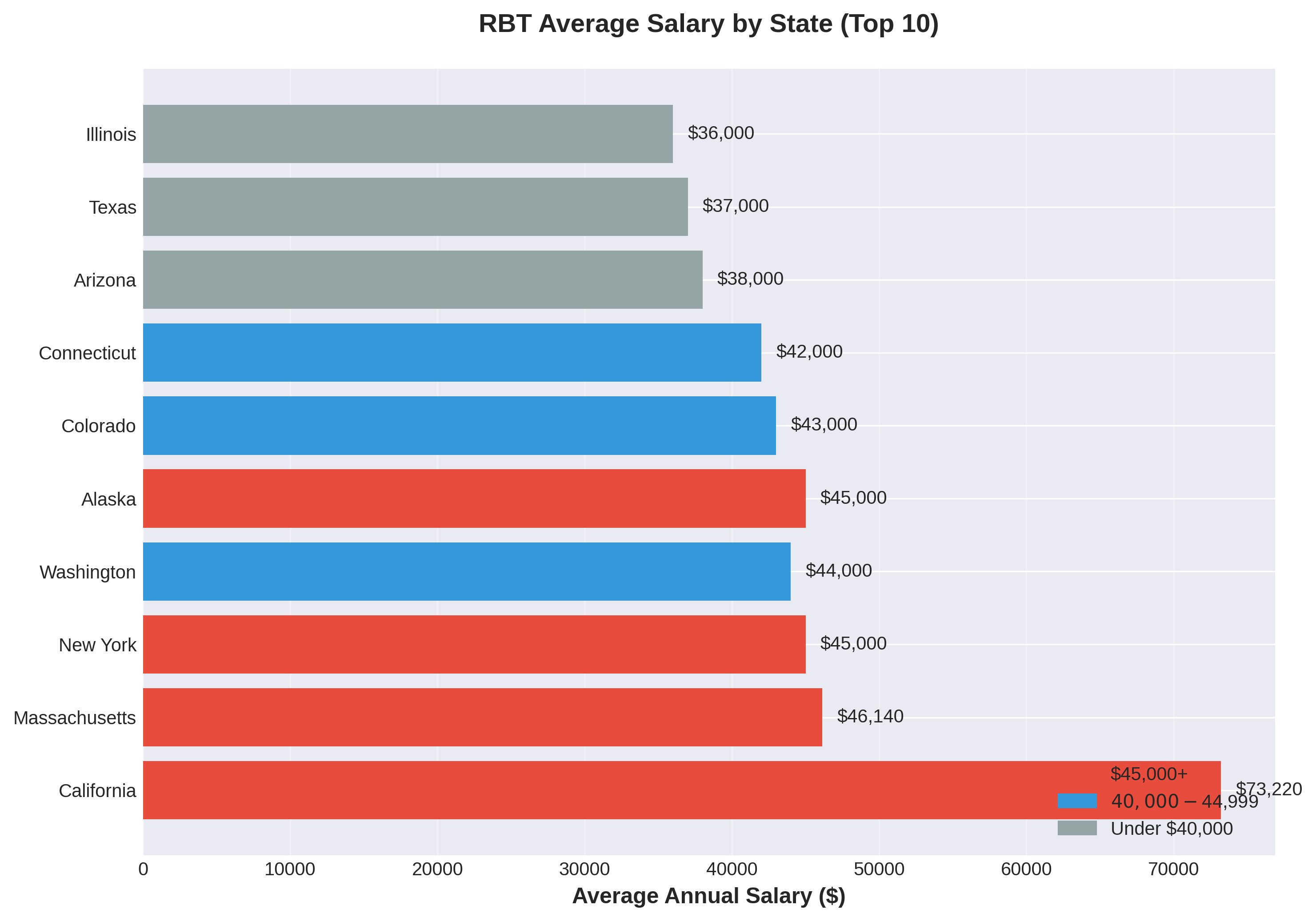
As the chart illustrates, there is a considerable variation in RBT salaries across the country. While states like California and Massachusetts offer higher average salaries, it's essential to consider the cost of living in these areas when evaluating overall earning potential.
Key Factors That Influence RBT Salary
Beyond geography, several other factors play a crucial role in determining an RBT's salary:
- Experience Level: Entry-level RBTs can expect to start at the lower end of the salary range, while those with several years of experience and a proven track record of success can command higher pay. Experienced RBTs who have specialized skills or have taken on leadership roles, such as training new technicians, are particularly valuable.
- Work Setting: The type of employer can also impact salary. Private ABA clinics and large, multi-state providers often offer the most competitive salaries. School districts may offer lower base salaries but often provide excellent benefits and a more structured work schedule.
- Billable Hour Requirements: Many ABA companies have billable hour requirements for their RBTs. While a higher hourly rate may seem attractive, it's important to consider the consistency of hours and whether the position is full-time or part-time.
- Certifications and Education: While the RBT is an entry-level certification, additional training or a bachelor's degree in a related field (e.g., psychology, education) can make a candidate more competitive and potentially lead to a higher starting salary.
RBT Salary in the Context of the ABA Career Ladder
The RBT role is often the first step on a rewarding career path in ABA. Understanding how RBT compensation compares to other roles in the field can provide valuable context for long-term career planning. The following chart illustrates the typical salary ranges for various positions within the ABA field.
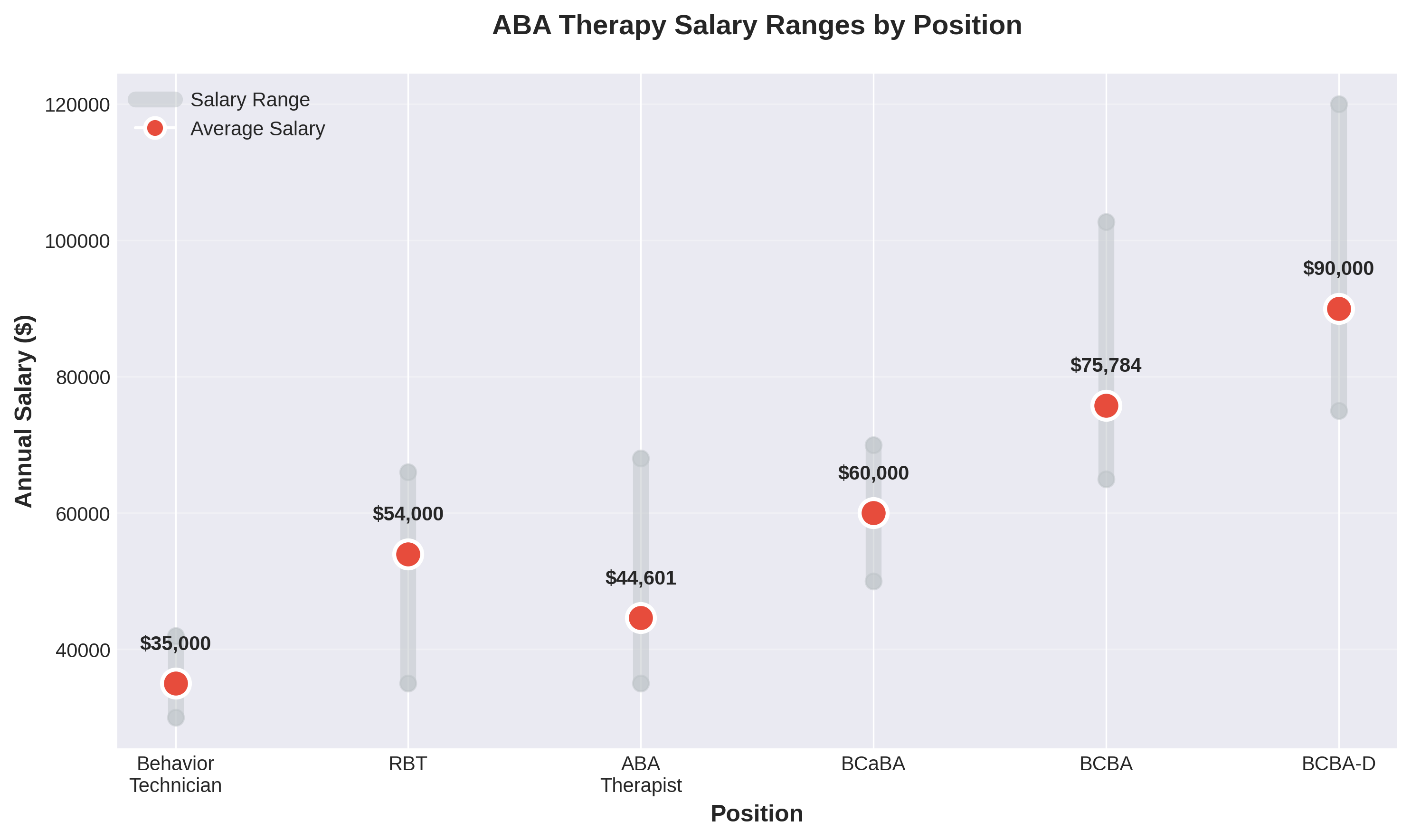
As the chart shows, there is a clear and significant increase in earning potential with advanced certification. This highlights the financial incentive for RBTs to pursue further education and become a Board Certified Assistant Behavior Analyst (BCaBA) or a Board Certified Behavior Analyst (BCBA).
Career Progression and Earning Potential
The path from RBT to BCBA is a common and highly encouraged career trajectory in the ABA field. This progression not only leads to increased responsibility and clinical autonomy but also to a substantial increase in salary. The chart below visualizes the potential salary growth as an ABA professional gains experience and advances in their career.
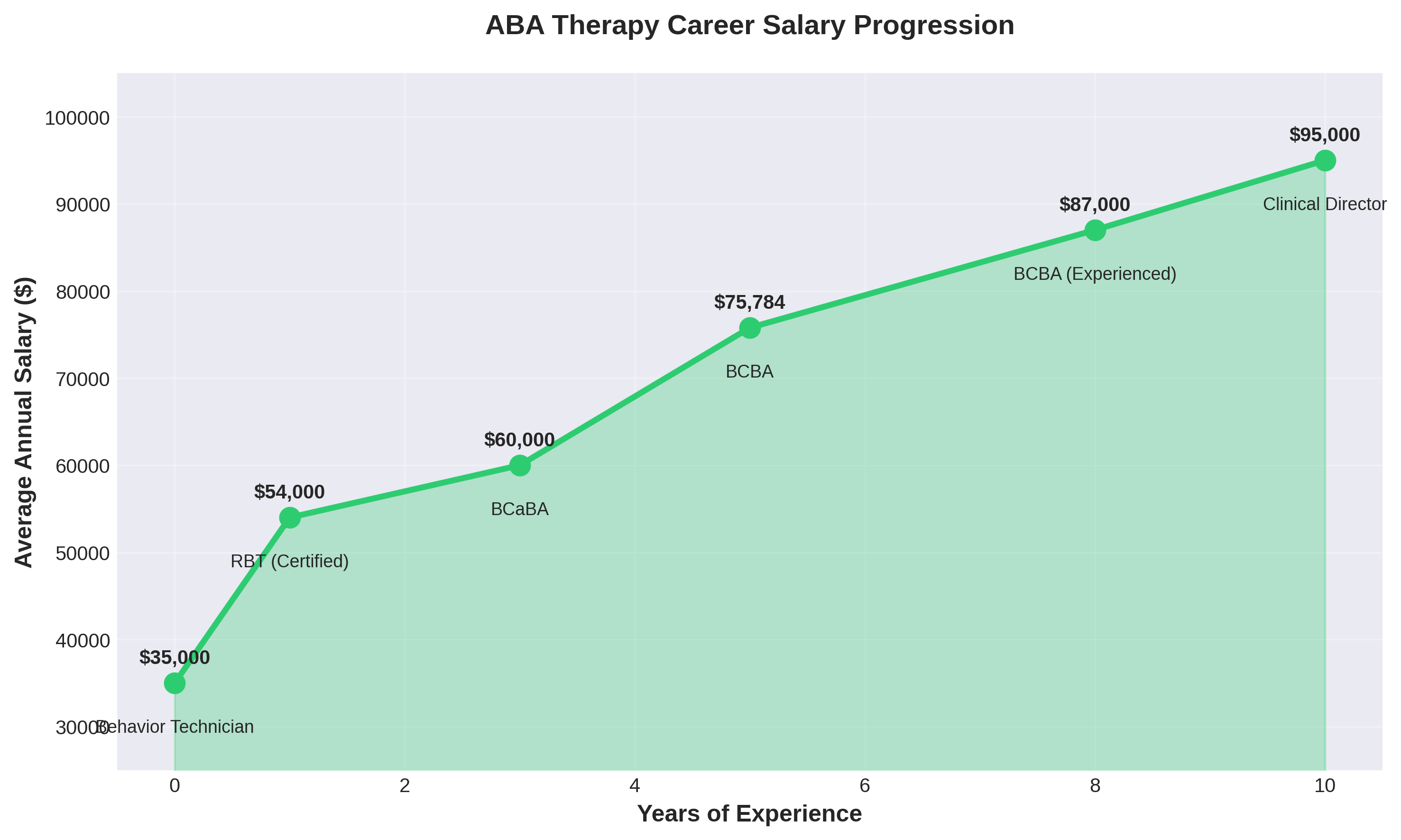
For many, the RBT role is a stepping stone. The experience gained as an RBT is invaluable for those who wish to pursue a master's degree and become a BCBA. The long-term earning potential for a BCBA is significantly higher than that of an RBT, making the investment in further education a financially sound decision for those committed to a career in ABA.
Conclusion: A Promising Financial Outlook for RBTs
The financial outlook for Registered Behavior Technicians in 2025 is strong and promising. With a competitive national average salary, significant geographic variation that allows for choice, and a clear path for career and salary advancement, the RBT profession offers a stable and rewarding career. By understanding the factors that influence compensation and the opportunities for growth, aspiring and current RBTs can navigate the job market with confidence and build a successful and financially secure future in the dynamic and impactful field of Applied Behavior Analysis.