
Introduction to the ABA Therapy Industry
The field of Applied Behavior Analysis (ABA) has experienced remarkable growth over the past two decades, driven by increased awareness of autism spectrum disorder (ASD), the proven effectiveness of ABA interventions, and expanded insurance coverage for these services. This growth has created a robust and dynamic job market for ABA therapists, offering a wide range of career opportunities for those passionate about making a meaningful difference in the lives of individuals with developmental disabilities. This article provides a comprehensive overview of the ABA therapy industry, exploring the various job roles, the best career paths, and the geographic regions and work settings that offer the most promising opportunities. Our goal is to equip aspiring and current ABA professionals with the information they need to navigate the job market and build a successful and fulfilling career while contributing to improved access to quality care.
The ABA Therapy Industry: A Snapshot
The ABA therapy industry is a multi-billion-dollar sector that continues to expand at a rapid pace. According to industry reports, the demand for ABA services is projected to grow significantly over the next decade, driven by several key factors:
- Rising Prevalence of Autism: The Centers for Disease Control and Prevention (CDC) reports that approximately 1 in 36 children in the United States is diagnosed with ASD. This increasing prevalence directly translates to a greater need for ABA services.
- Insurance Mandates: All 50 states now have some form of insurance mandate requiring coverage for ABA therapy, which has dramatically increased access to services and, consequently, the demand for qualified professionals.
- Evidence-Based Practice: ABA is widely recognized as the most effective, evidence-based treatment for autism. This recognition has solidified its place as a primary intervention, further driving demand.
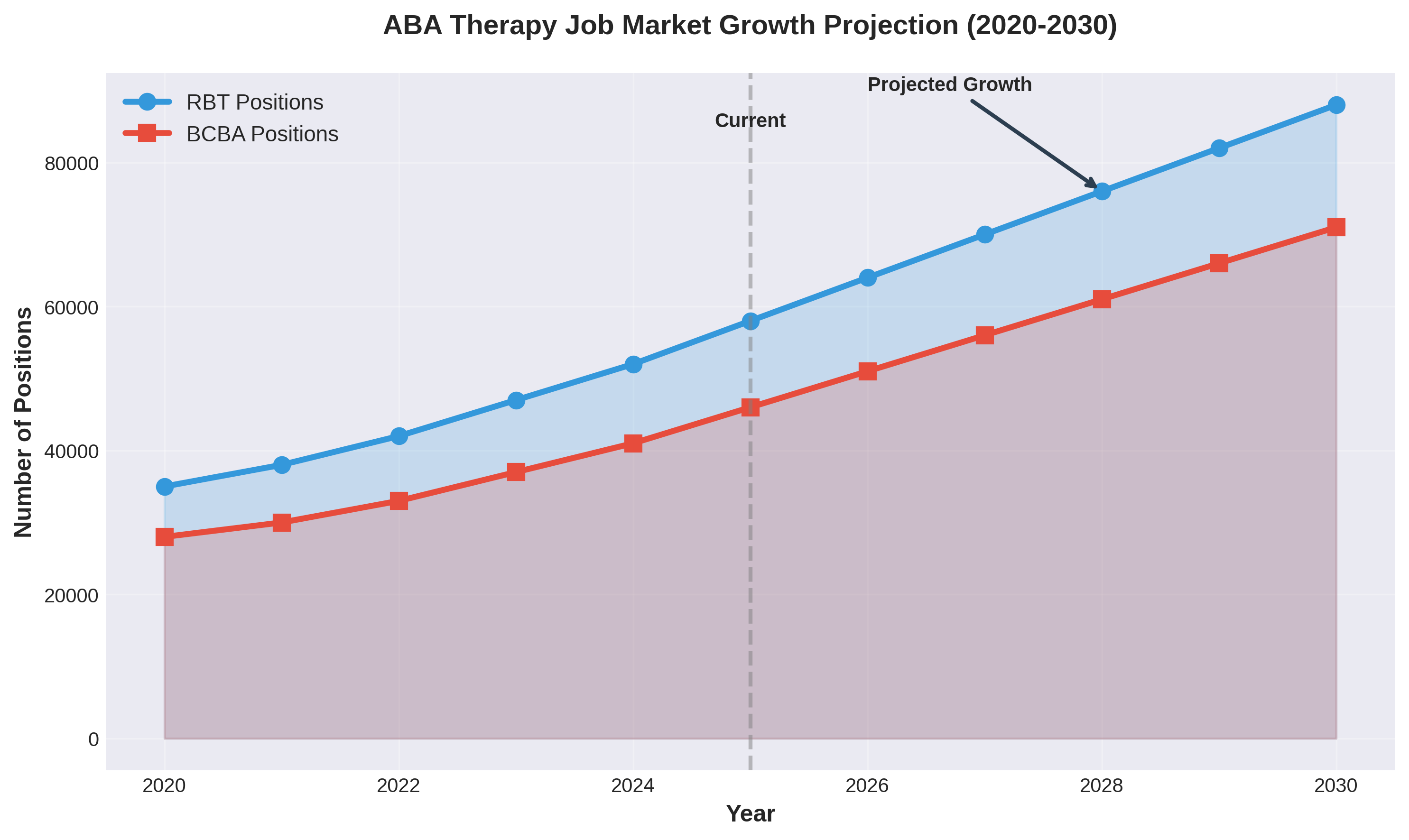
As the chart above illustrates, the job market for both Registered Behavior Technicians (RBTs) and Board Certified Behavior Analysts (BCBAs) is expected to continue its upward trajectory, making this a stable and promising field for long-term career planning.
Key ABA Therapist Roles: Understanding the Career Ladder
The ABA field offers a clear career ladder with multiple entry and advancement points. Understanding the different roles is essential for anyone considering a career in ABA.
Entry-Level Positions:
- Behavior Technician (BT) / ABA Technician: This is the most entry-level position, often requiring no formal certification. BTs work under direct supervision and assist with implementing treatment plans.
- Registered Behavior Technician (RBT): The RBT is a paraprofessional certification that requires a 40-hour training course, a competency assessment, and passing a certification exam. RBTs are the primary implementers of ABA therapy and work under the supervision of a BCBA.
Mid-Level Positions:
- Board Certified Assistant Behavior Analyst (BCaBA): This role requires a bachelor's degree, specific coursework, and supervised fieldwork. BCaBAs can supervise RBTs and assist BCBAs with treatment planning and implementation.
Professional-Level Positions:
- Board Certified Behavior Analyst (BCBA): This is the gold standard in the ABA field. BCBAs have a master's degree, extensive coursework, and supervised fieldwork. They conduct assessments, design treatment plans, supervise other ABA professionals, and are responsible for the overall quality of care.
- BCBA-Doctoral (BCBA-D): A BCBA who has also earned a doctoral degree in a related field, often involved in research, training, and leadership roles.
The Best Jobs in ABA Therapy: Roles and Responsibilities
While all roles in ABA are valuable, some positions offer greater autonomy, earning potential, and professional satisfaction. Here are some of the best jobs in the ABA therapy field:
1. Board Certified Behavior Analyst (BCBA)
This is the most sought-after role in the field. BCBAs have the highest level of clinical autonomy, the ability to design and oversee treatment programs, and the highest earning potential. They work in a variety of settings, from private clinics to schools, and are in high demand across the country.
2. Clinical Director / Program Director
For BCBAs with leadership aspirations, a clinical director role offers the opportunity to oversee entire ABA programs, manage teams of clinicians, and shape the clinical culture of an organization. These positions typically come with higher salaries and significant responsibility.
3. BCBA Supervisor
Experienced BCBAs who enjoy mentoring and training others can pursue a role as a BCBA supervisor. In this position, they oversee the work of other BCBAs and BCaBAs, provide clinical guidance, and ensure the quality of services across a program or organization.
4. Senior RBT / Lead RBT
For RBTs who are not yet ready to pursue a master's degree, a senior or lead RBT position can offer increased responsibility and pay. These roles often involve training new RBTs, assisting with data analysis, and serving as a liaison between the RBT team and the BCBA.
Where Are the Best ABA Therapy Jobs? Geographic Considerations
The demand for ABA therapists is high across the United States, but some states and regions offer more opportunities and higher salaries than others. The following are some of the top states for ABA therapy jobs:
- California: With the highest salaries in the nation for both RBTs and BCBAs, California is a top destination for ABA professionals. The state's large population and strong economy support a robust ABA industry.
- Texas: Texas offers a strong job market with competitive salaries, particularly in major metropolitan areas like Houston, Dallas, and Austin.
- Florida: Florida's growing population and warm climate make it an attractive state for ABA professionals. The demand for services is high, and there are many job opportunities.
- New York: New York, particularly the New York City metro area, offers high salaries and a diverse range of work settings.
- Massachusetts: Known for its strong healthcare sector, Massachusetts offers excellent opportunities for ABA professionals, particularly in the Boston area.
Best Work Settings for ABA Therapists
ABA therapists work in a variety of settings, each offering a unique work environment and set of experiences. The best setting depends on individual preferences and career goals.
- Private ABA Clinics: These are the most common employers of ABA therapists. Private clinics often offer the most competitive salaries and opportunities for professional development.
- In-Home Services: Many ABA companies provide in-home therapy, which allows therapists to work in a more natural environment and build strong relationships with families.
- Schools: Working in a school setting can offer a more structured schedule and the opportunity to collaborate with teachers and other school staff.
- Hospitals and Healthcare Systems: Some hospitals have specialized ABA programs, which can offer opportunities to work with a multidisciplinary team.
Conclusion: A Field of Opportunity and Impact
The ABA therapy industry offers a wealth of opportunities for those seeking a meaningful and rewarding career. With a clear career ladder, strong job growth projections, and a variety of work settings to choose from, the ABA field is an excellent choice for individuals who are passionate about helping others. By understanding the industry landscape, the different job roles, and the geographic regions and work settings that offer the best opportunities, aspiring ABA professionals can chart a course for a successful and impactful career.