Understanding RBT Compensation
For individuals passionate about making a difference in the lives of others, a career as a Registered Behavior Technician (RBT) can be incredibly rewarding. RBTs are the backbone of the Applied Behavior Analysis industry, working on the front lines to implement treatment plans and support clients. A common and important question for those considering this career path is: How much do RBTs make an hour? Understanding the financial aspects of the role is a critical part of making an informed career decision.
This comprehensive guide will provide a detailed answer to that question, exploring the national average for RBT hourly pay, how compensation varies by state and experience level, and the key factors that can influence your earning potential as an RBT.
The National Average: What RBTs Make an Hour
According to recent data from a variety of salary aggregators and industry reports, the national average hourly pay for a Registered Behavior Technician in the United States typically falls between $20 and $25 per hour. However, this is just a starting point. The actual answer to "how much do RBTs make an hour?" can vary significantly based on a number of factors.
It is also important to note that many RBT positions are paid on a billable-hour basis. This means that you are only paid for the time you are providing direct therapy to a client. This can lead to some income instability, as client cancellations or gaps in your schedule can affect your take-home pay. However, a growing number of ABA providers are moving towards a salaried model or offering paid time for non-billable activities, which can provide a more stable and predictable income.
State-by-State Breakdown: Geographic Variations in RBT Pay
One of the biggest factors influencing how much RBTs make an hour is location. Just as the cost of living varies across the country, so does RBT compensation. States with a higher cost of living and a greater demand for ABA services tend to offer higher hourly rates.
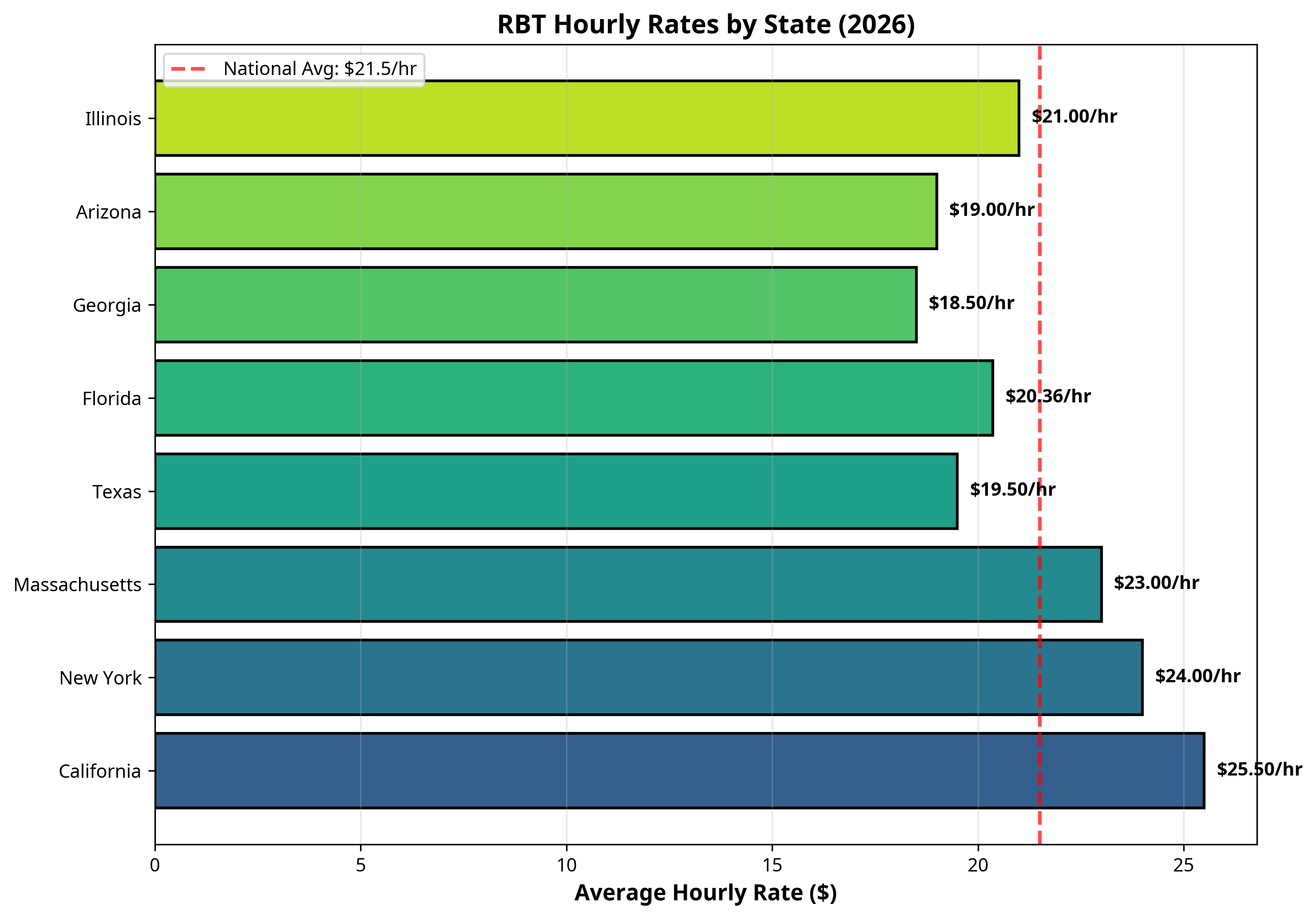
Figure 1: A comparison of average RBT hourly rates in several key states for 2026. This illustrates the significant impact that geography can have on earning potential.
Here is a closer look at how RBT pay varies in different regions:
• High-Paying States: States like California, New York, and Massachusetts consistently rank among the highest-paying states for RBTs, with average hourly rates often exceeding $25 per hour.
• Mid-Range States: States like Texas, Florida, and Illinois typically offer hourly rates that are closer to the national average, in the range of $19 to $22 per hour.
• Lower-Paying States: States in the Southeast and Midwest tend to have lower average hourly rates, often in the range of $17 to $19 per hour.
When considering a job offer, it is essential to research the average RBT pay for your specific state and city to ensure that you are being offered a competitive wage.
Key Factors That Influence RBT Hourly Pay
Beyond geography, several other factors can impact how much you make an hour as an RBT:
1. Experience Level
As with most professions, experience matters. An RBT with several years of experience and a proven track record of success will typically command a higher hourly rate than a newly certified RBT. Some organizations have a tiered system, with pay increases tied to years of service and performance.
2. Education
While the minimum requirement to become an RBT is a high school diploma, having a bachelor’s degree in psychology, education, or a related field can make you a more attractive candidate and may lead to a higher starting salary.
3. Work Setting
The type of organization you work for can also play a role. RBTs who work in school settings or for large, well-established ABA providers may earn a higher hourly rate than those who work for smaller, newer clinics.
4. Additional Certifications and Skills
Having additional certifications, such as CPR or crisis intervention training, can make you a more valuable employee and may lead to a higher hourly rate. Fluency in a second language, particularly Spanish, is also a highly sought-after skill that can boost your earning potential.
Maximizing Your Earning Potential as an RBT
If you are looking to increase how much you make an hour as an RBT, there are several steps you can take:
• Gain Experience: The longer you work in the field, the more valuable you become.
• Seek Out High-Quality Supervision: Good supervision will not only make you a better RBT but will also help you prepare for the next step in your career.
• Pursue a Bachelor’s or Master’s Degree: Furthering your education is one of the most effective ways to increase your earning potential in the ABA field.
• Consider Becoming a BCABA or BCBA: The most significant jump in salary comes from advancing your certification level. The path from RBT to BCBA is a challenging but highly rewarding one.
Conclusion: A Career with Growth Potential
So, how much do RBTs make an hour? While the national average provides a general benchmark, the answer is that it depends. By understanding the factors that influence RBT pay and by taking a proactive approach to your professional development, you can maximize your earning potential and build a financially rewarding career in a field that is dedicated to making a positive impact. The demand for your skills is high, and with the right strategy, you can achieve both your professional and financial goals.