Introduction
Choosing a career path in the behavioral health field often involves considering various factors, including educational requirements, scope of practice, and earning potential. For many, the choice between becoming a Board Certified Behavior Analyst (BCBA) or a licensed psychologist is a significant one. This report provides a comparative analysis of the salaries for BCBAs and various types of psychologists, exploring the key differences in compensation and the factors that contribute to them.
Salary Comparison: BCBA vs. Psychologist
On average, licensed psychologists earn a higher salary than BCBAs. The salary gap can be attributed to differences in educational requirements, licensure, and scope of practice. The following chart provides a snapshot of the average annual salaries for BCBAs and different types of psychologists in 2024-2025.
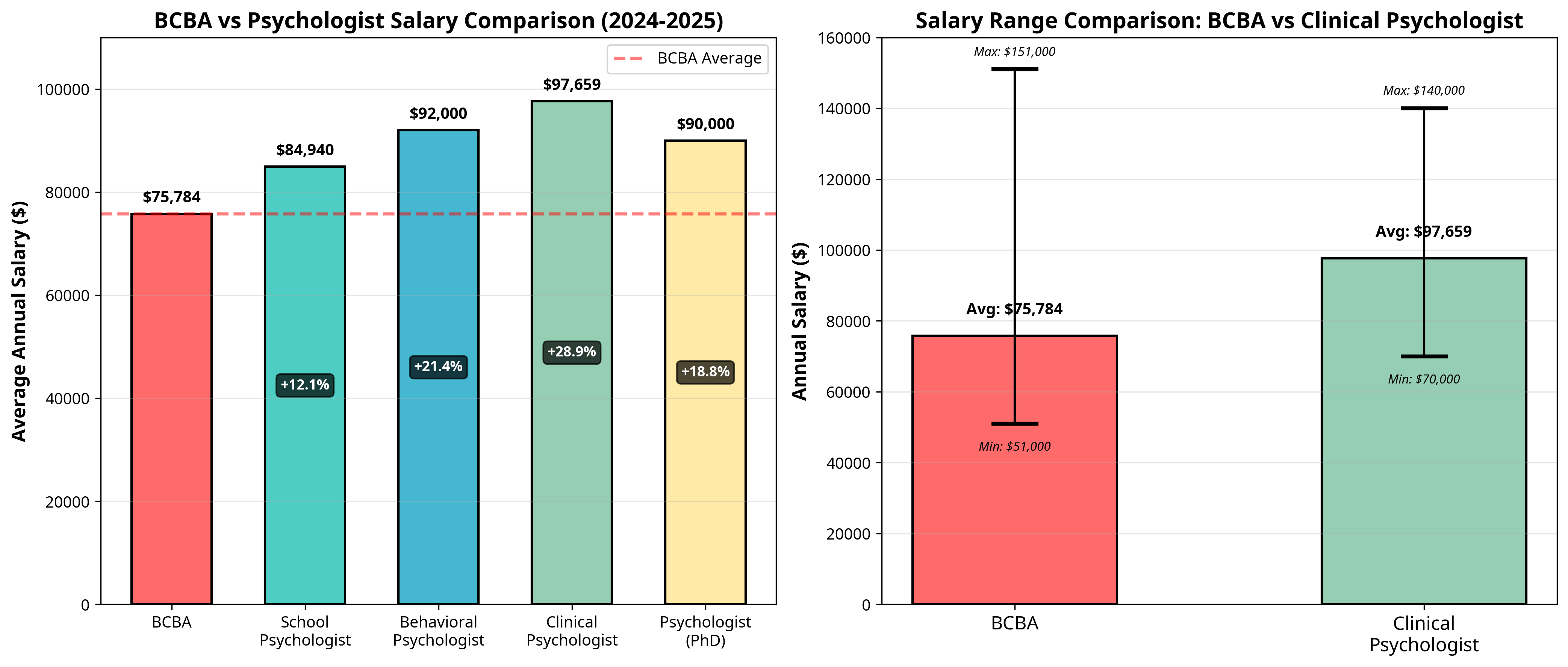
Figure 1: A comparison of the average annual salaries for BCBAs and various psychology professions. The data highlights the salary advantage of psychologists over BCBAs.
As the data shows, Clinical Psychologists have the highest average salary at $97,659, which is approximately 28.9% higher than the average BCBA salary of $75,784.
School Psychologists and Behavioral Psychologists also tend to earn more than BCBAs, though the gap is smaller.
Salary Range Comparison
The salary ranges for BCBAs and Clinical Psychologists also show notable differences. While both professions have a wide range of earning potential, the starting and top-end salaries for Clinical Psychologists are generally higher.
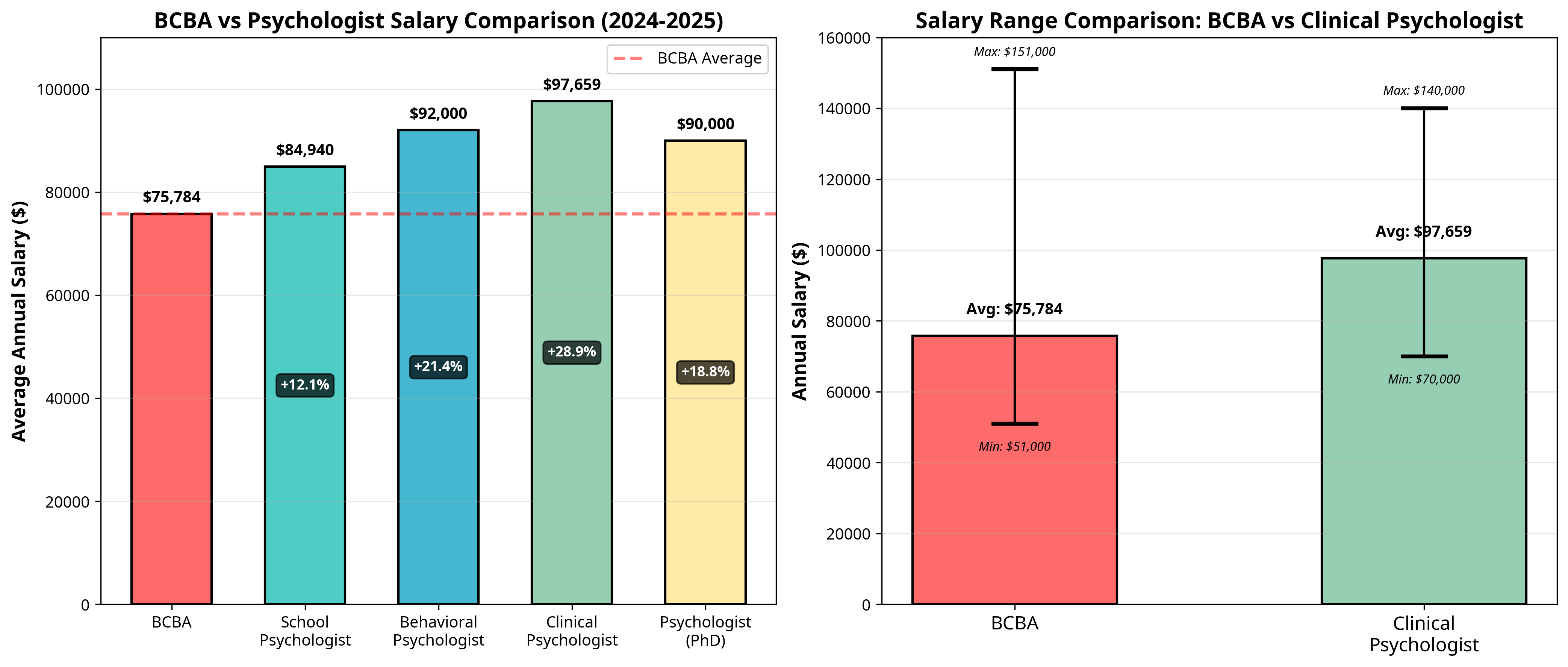
Figure 2: A comparison of the salary ranges for BCBAs and Clinical Psychologists, including minimum, average, and maximum earning potential.
Factors Influencing the Salary Gap
Several key factors contribute to the salary disparity between BCBAs and psychologists:
- Educational Requirements: The most significant factor is the level of education required. To become a licensed psychologist, a doctoral degree (Ph.D. or Psy.D.) is typically required, which involves several more years of education and training than the master's degree required for BCBA certification.
- Licensure and Scope of Practice: Psychologists have a broader scope of practice, which can include diagnosis, psychotherapy, and psychological testing. This broader scope, combined with more stringent licensure requirements, often leads to higher reimbursement rates from insurance companies.
- Years to Qualify: The time it takes to become fully qualified is also a factor. It takes an average of 5 years to become a BCBA, while becoming a licensed psychologist can take 8 years or more, including the completion of a doctoral degree and postdoctoral experience.
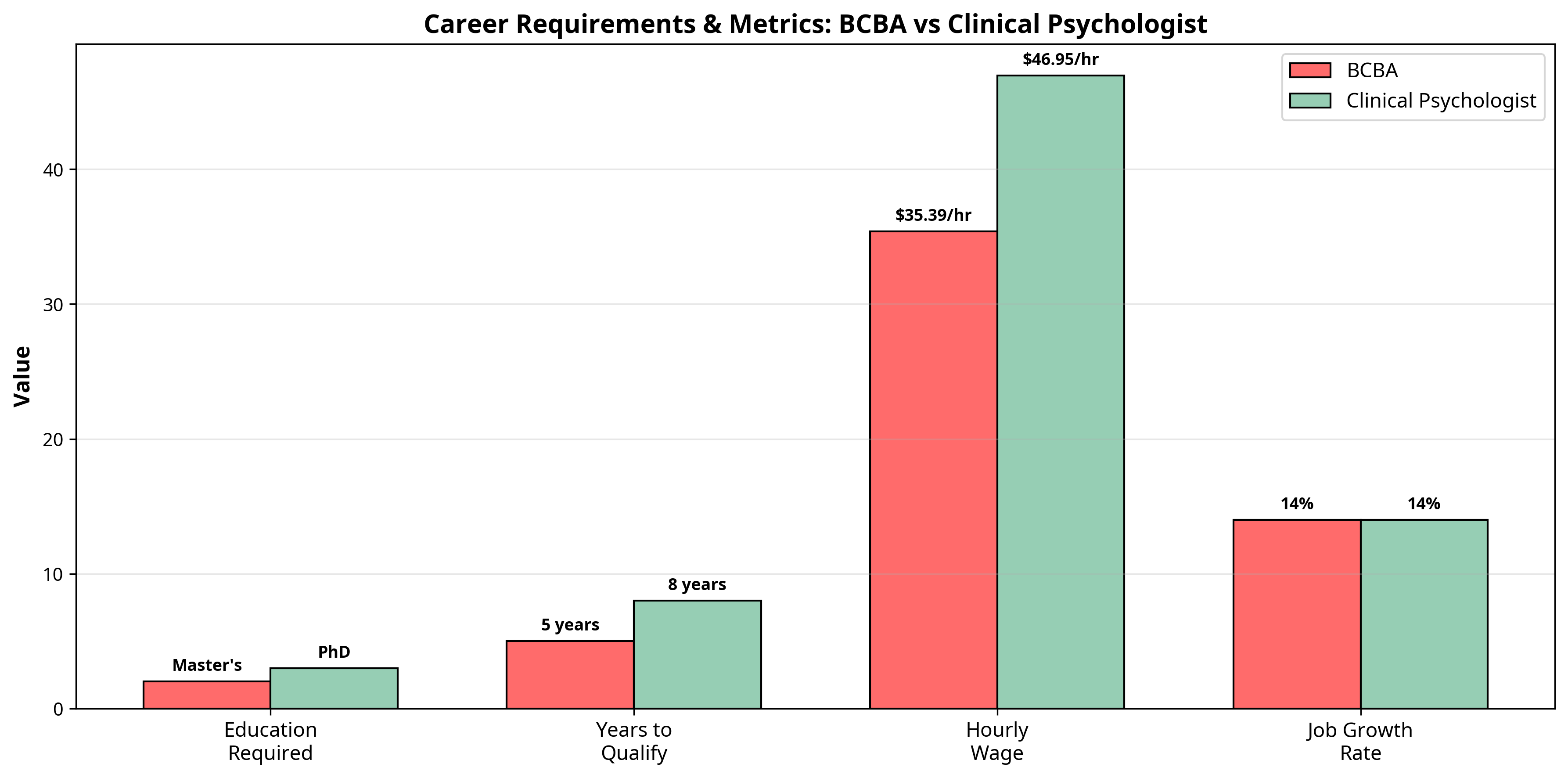
Figure 3: A comparison of key career metrics for BCBAs and Clinical Psychologists, including education, years to qualify, hourly wage, and job growth rate.
Job Growth and Career Outlook
Despite the salary differences, both BCBAs and psychologists have a strong career outlook. The job growth rate for both professions is projected to be 14%, which is much faster than the average for all occupations 1
This high demand is driven by a growing awareness of mental and behavioral health issues and an increased need for services.
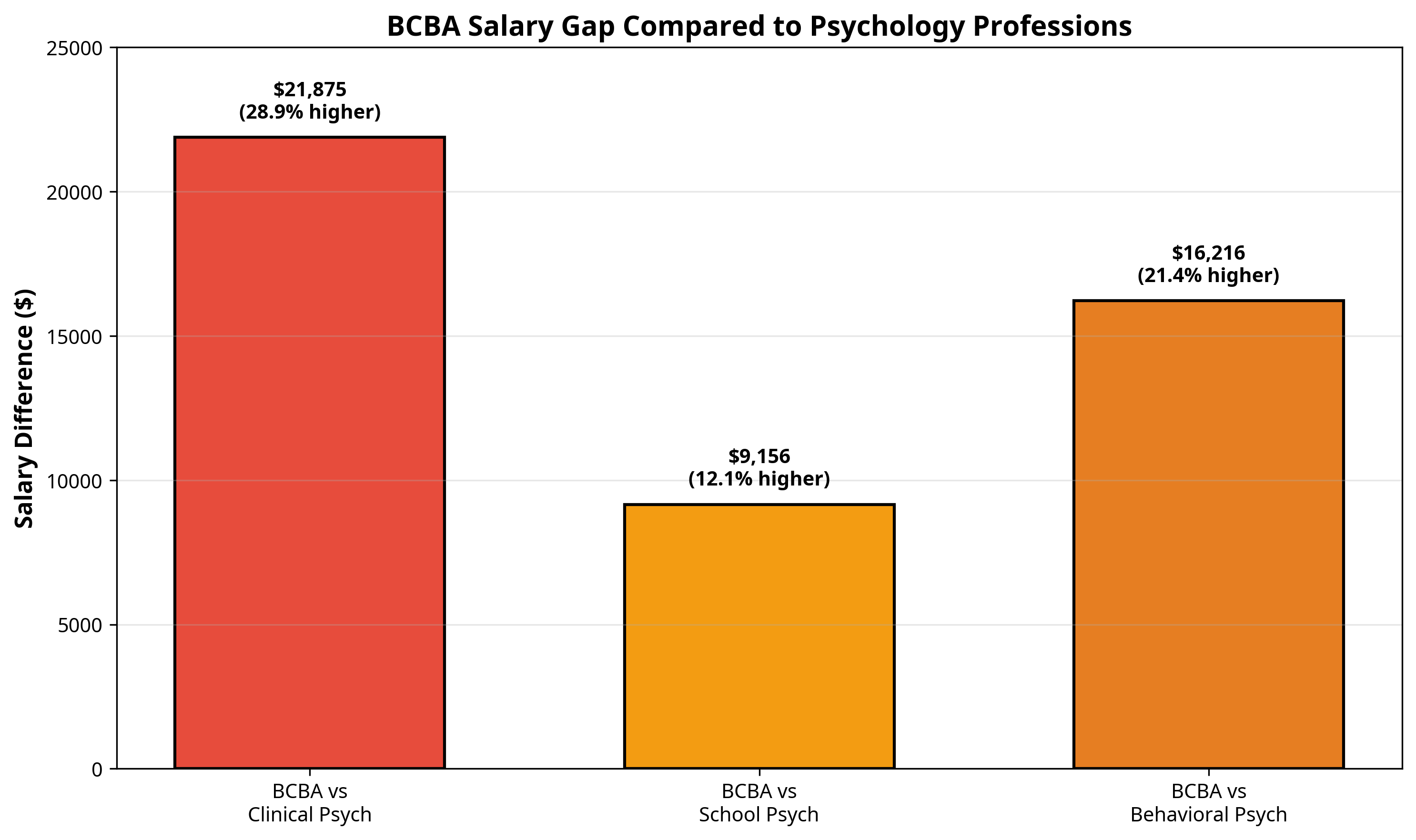
Figure 4: An analysis of the salary gap between BCBAs and various psychology professions, showing the difference in both dollar amount and percentage.
Conclusion
While licensed psychologists generally earn higher salaries than BCBAs, both professions offer rewarding careers with strong growth potential. The choice between these two paths should be based on a careful consideration of individual career goals, educational aspirations, and desired scope of practice. The salary gap reflects the differences in educational investment and professional responsibilities, but both fields provide the opportunity to make a significant impact on the lives of others.
References
[1] Zippia. (2025). Behavior Analyst vs. Clinical Psychologist: What’s the Difference Between Them?.
[2] GradSchools.com. (2025). Applied Behavior Analyst Salary 2025+.
[3] Psychology.org. (2025). How To Become A Behavioral Psychologist: A Step-By-Step Guide.
[4] OnlineABAPrgrams.org. (2025). BCBA vs Psychologist: Your Complete Career Choice Guide.