
Introduction to ABA Therapist Compensation in the United States
Applied Behavior Analysis (ABA) therapy has become a cornerstone of treatment for individuals with autism spectrum disorder (ASD) and other developmental conditions. This has led to a surge in demand for qualified ABA professionals, from entry-level technicians to board-certified analysts. For those considering a career in this rewarding field, understanding the compensation landscape is a crucial first step. This article provides a comprehensive overview of ABA therapist salaries in the United States for 2025, exploring the various roles within the field, the factors that influence pay, and the overall earning potential. Our goal is to provide a clear and data-driven analysis to support aspiring and current ABA professionals in their career planning, and to help ensure the continued growth and quality of the ABA workforce.
Understanding the Term "ABA Therapist"
The term "ABA therapist" is often used as a general descriptor for a variety of roles within the ABA field. It can refer to anyone who provides direct ABA services, but it's important to distinguish between the different levels of certification and responsibility, as these have a significant impact on salary. The primary roles in the ABA therapy career ladder are:
- Behavior Technician (BT) or ABA Technician: An entry-level position that does not require certification. These individuals work under the close supervision of a BCBA.
- Registered Behavior Technician (RBT): A paraprofessional who has completed a 40-hour training course and passed a competency assessment and certification exam.
- Board Certified Assistant Behavior Analyst (BCaBA): A professional with a bachelor's degree and specific coursework and fieldwork who can supervise RBTs and assist with treatment planning.
- Board Certified Behavior Analyst (BCBA): A professional with a master's degree, extensive coursework, and supervised fieldwork who can conduct assessments, design treatment plans, and supervise other ABA professionals.
- Board Certified Behavior Analyst-Doctoral (BCBA-D): A BCBA who has also earned a doctoral degree in a related field.
ABA Therapist Salary by Role: A Detailed Breakdown
Compensation in the ABA field is directly tied to the level of certification and responsibility. The following chart provides a visual representation of the typical salary ranges for each position on the ABA career ladder.

As the chart illustrates, there is a clear and substantial increase in earning potential with each step up the career ladder. While an entry-level Behavior Technician may start with a salary in the $30,000s, a BCBA can earn a salary that is more than double that, and a BCBA-D can command even higher compensation.
Average Salaries for Key ABA Roles in 2025:
- ABA Therapist (General/Entry-Level): The average salary for a general ABA therapist or Behavior Technician is approximately $35,938 to $44,601 per year
- Registered Behavior Technician (RBT): With certification, the average salary increases to around $54,000 per year
- Board Certified Behavior Analyst (BCBA): The average salary for a BCBA is approximately $75,784 per year, with experienced BCBAs earning well over $87,000
Factors That Influence ABA Therapist Salary
Several key factors, in addition to certification level, can influence an ABA therapist's salary:
- Geographic Location: Salaries vary significantly by state and even by city. States with a higher cost of living and a greater demand for ABA services, such as California, New York, and Massachusetts, typically offer higher salaries.
- Work Setting: The type of employer plays a major role. Private ABA clinics and large, for-profit organizations often offer the most competitive salaries. Non-profit organizations and school districts may offer lower base salaries but often provide better benefits and work-life balance.
- Years of Experience: As with any profession, experience matters. An ABA therapist with several years of experience and a proven track record of success will command a higher salary than a recent graduate.
- Specializations: Holding specialized skills or certifications in areas such as early intervention, verbal behavior, or working with specific populations can also lead to higher pay.
The Career and Salary Progression in ABA Therapy
The ABA field offers a clear and rewarding career path with significant potential for salary growth. The journey from an entry-level technician to a board-certified analyst is a common one, and it is a path that is both professionally and financially rewarding. The chart below illustrates the potential salary progression as an ABA professional gains experience and advances in their career.
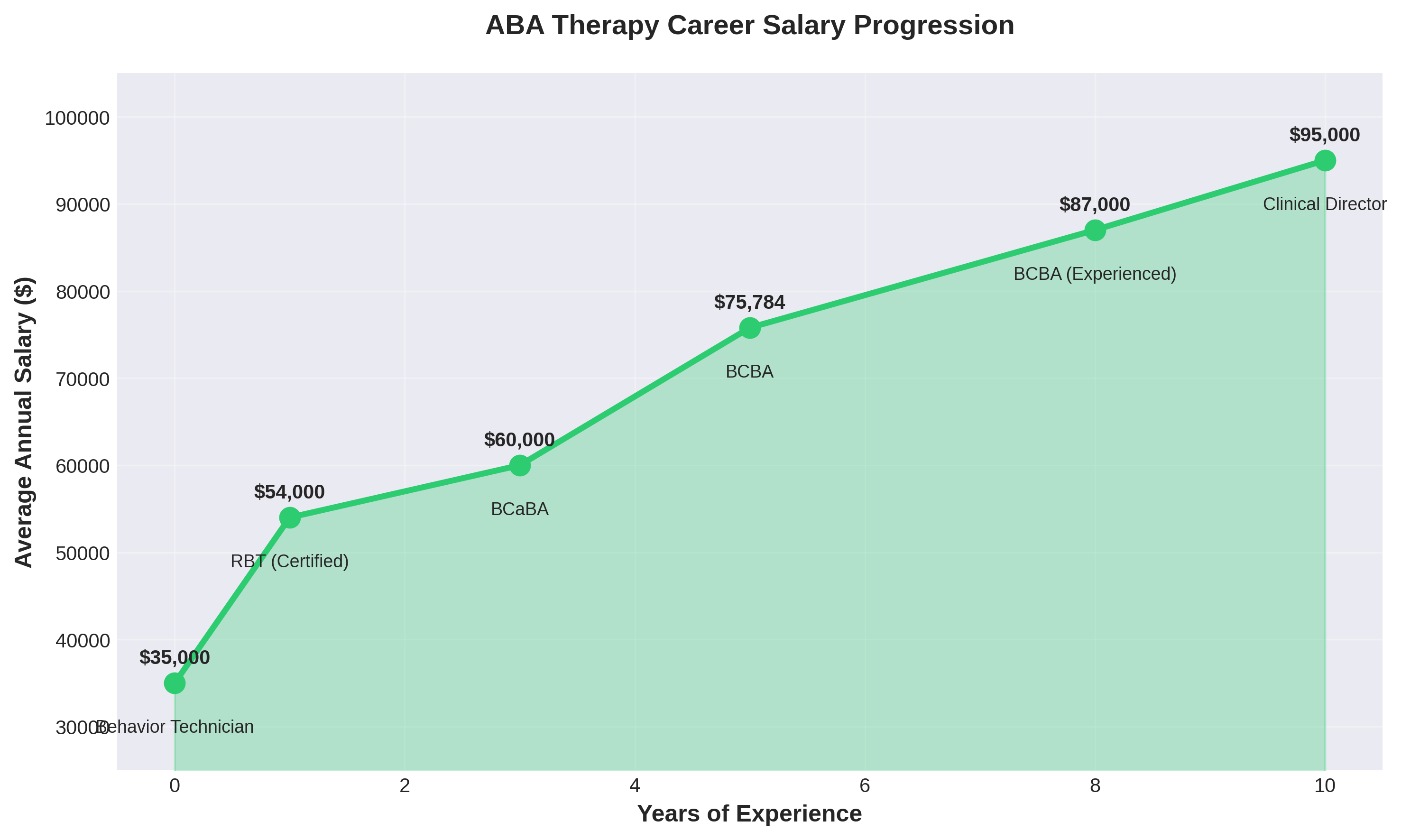
The data clearly shows that investing in further education and certification is the key to maximizing earning potential in the ABA field. The experience gained as an RBT is invaluable for those who go on to pursue a master's degree and become a BCBA, and the financial returns on this investment are substantial.
Conclusion: A Field with a Bright Financial Future
The financial outlook for ABA therapists in the United States is bright and full of opportunity. With a strong and growing demand for services, a clear career ladder with significant salary progression, and a variety of work settings to choose from, the ABA field offers a stable and financially rewarding career path. For those who are passionate about making a difference in the lives of others, a career in ABA therapy is not only emotionally fulfilling but also offers a secure and prosperous future.